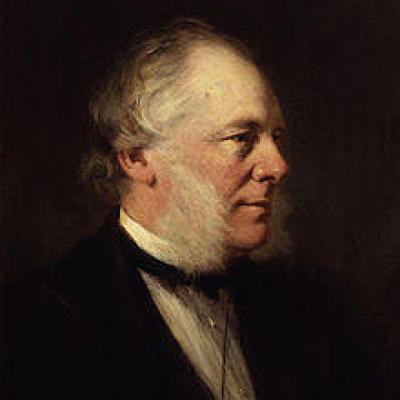
The spirit of self-help is the root of all genuine growth in the individual; and, exhibited in the lives of many, it constitutes the true source of national vigour and strength. Help from without is often enfeebling in its effects, but help from within invariably invigorates
The women of the poorer classes make sacrifices, and run risks, and bear privations, and exercise patience and kindness to a degree that the world never knows of, and would scarcely believe even if it did know.
Conscience is that peculiar faculty of the soul which may be called the religious instinct.
Wisdom and understanding can only become the possession of individual men by travelling the old road of observation, attention, perseverance, and industry.
Men whose acts are at variance with their words command no respect, and what they say has but little weight.
The knowledge and experience which produce wisdom can only become a man's individual possession and property by his own free action; and it is as futile to expect these without laborious, painstaking effort, as it is to hope to gather a harvest where the seed has not been sown.
It is possible that the scrupulously honest man may not grow rich so fast as the unscrupulous and dishonest one; but the success will be of a truer kind, earned without fraud or injustice. And even though a man should for a time be unsuccessful, still he must be honest: better lose all and save character. For character is itself a fortune. . . .
No laws, however stringent, can make the idle industrious, the thriftless provident, or the drunken sober. Such reforms can only be effected by means of individual action, economy and self-denial; by better habits, rather than by greater rights.
Those who have most to do, and are willing to work, will find the most time.
Genius, without work, is certainly a dumb oracle, and it is unquestionably true that the men of the highest genius have invariably been found to be amongst the most plodding, hard-working, and intent men -- their chief characteristic apparently consisting simply in their power of laboring more intensely and effectively than others.
No laws, however stringent, can make the idle industrious, the thriftless provident, or the drunken sober.
All work and no play makes Jack a dull boy. But all play and no work makes him something worse.
Progress, of the best kind, is comparatively slow
Obedience, submission, discipline, courage--these are among the characteristics which make a man.
Character is itself a fortune.
Luck lies in bed, and wishes the postman would bring him news of a legacy; labor turns out at six, and with busy pen or ringing hammer lays the foundation of a competence.
Fortune has often been blamed for her blindness; but fortune is not so blind as men are. Those who look into practical life will find that fortune is usually on the side of the industrious, as the winds and waves are on the side of the best navigators.
The apprenticeship of difficulty is one which the greatest of men have had to serve.
Men often discover their affinity to each other by the mutual love they have for a book.
With will one can do anything.
Help from without is often enfeebling in its effects, but help from within invariably invigorates.
Great men stamp their mind upon their age and nation.
The reason why so little is done, is generally because so little is attempted.
To set a lofty example is the richest bequest a man can leave behind.
This extraordinary metal, the soul of every manufacture, and the mainspring perhaps of civilised society. Of iron.
The shortest way to do many things is to do only one thing at once.
The very greatest things - great thoughts, discoveries, inventions - have usually been nurtured in hardship, often pondered over in sorrow, and at length established with difficulty.
The duty of helping one's self in the highest sense involves the helping of one's neighbors.
The experience gathered from books, though often valuable, is but the nature of learning; whereas the experience gained from actual life is one of the nature of wisdom.
The highest culture is not obtained from the teacher when at school or college, so much as by our ever diligent self-education when we become men.
Self-respect is the noblest garment with which a man can clothe himself, the most elevating feeling with which the mind can be inspired.
There is no act, however trivial, but has its train of consequences.
Men cannot be raised in masses as the mountains were in he early geological states of the world. They must be dealt with as units; for it is only by the elevation of individuals that the elevation of the masses can be effectively secured.
Life will always be to a large extent what we ourselves make it.
Progress however, of the best kind, is comparatively slow. Great results cannot be achieved at once; and we must be satisfied to advance in life as we walk, step by step.
The government of a nation itself is usually found to be but the reflux of the individuals composing it. The government that is ahead of the people will be inevitably dragged down to their level, as the government that is behind them will in the long run be dragged up.
Hope is like the sun, which, as we journey toward it, casts the shadow of our burden behind us.
Cheerfulness is also an excellent wearing quality. It has been called the bright weather of the heart.
Luck whines; labor whistles.
Commit a child to the care of a worthless, ignorant woman, and no culture in after-life will remedy the evil you have done.
It will generally be found that men who are constantly lamenting their ill luck are only reaping the consequences of their own neglect, mismanagement, and improvidence, or want of application.
Good sense, disciplined by experience and inspired by goodness, issues in practical wisdom.
Any number of depraved units cannot form a great nation.
Practical wisdom is only to be learned in the school of experience. Precepts and instruction are useful so far as they go, but, without the discipline of real life, they remain of the nature of theory only.
All experiences of life seems to prove that the impediments thrown in the way of the human advancement may for the most part be overcome by steady good conduct, honest zeal, activity, perseverance and above all, by a determined resolution to surmount.
Thus the brave and aspiring life of one man lights a flame in the minds of others of like faculties and impulse; and where there is equally vigorous effort, like distinction and success will almost surely follow. Thus the chain of example is carried down through time in an endless succession of links--admiration exciting imitation, and perpetuating the true aristocracy of genius.
Good character is property. It is the noblest of all possessions.
The best school of discipline is home. Family life is God's own method of training the young, and homes are very much as women make them.
The great and good do no die even in this world. Embalmed in books, their spirits walk abroad. The book is a living voice. It is an intellect to which one still listens.
Biographies of great, but especially of good men are most instructive and useful as helps, guides, and incentives to others. Some of the best are almost equivalent to gospels,--teaching high living ,high thinking, and energetic action, for their own and, the world's good.
The principal industrial excellence of the English people lay in their capacity of present exertion for a distant object.
The battle of life is, in most cases, fought uphill; and to win it without a struggle were perhaps to win it without honor. If there were no difficulties there would be no success; if there were nothing to struggle for, there would be nothing to be achieved.
Persons with comparatively moderate powers will accomplish much, if they apply themselves wholly and indefatigably to one thing at a time.
It is a grand old name, that of gentleman, and has been recognized as a rank and power in all stages of society. To possess this character is a dignity of itself, commanding the instinctive homage of every generous mind, and those who will not bow to titular rank will yet do homage to the gentleman. His qualities depend not upon fashion or manners, but upon moral worth; not on personal possessions, but on personal qualities.
Labour may be a burden and a chastisement, but it is also an honour and a glory. Without it, nothing can be accomplished.
So much does the moral health depend upon the moral atmosphere that is breathed, and so great is the influence daily exercised by parents over their children by living a life before their eyes, that perhaps the best system of parental instruction might be summed up in these two words: 'Improve thyself.'
Woman is the heart of humanity ... its grace, ornament, and solace.
Those who aren't making mistakes probably aren't making anything.
Though an inheritance of acres may be bequeathed, an inheritance of knowledge and wisdom cannot. The wealthy man may pay others for doing his work for him; but it is impossible to get his thinking done for him by another, or to purchase any kind of self-culture.
Even happiness itself may become habitual. There is a habit of looking at the bright side of things, and also of looking at the dark side. Dr. Johnson has said that the habit of looking at the best side of a thing is worth more to a man than a thousand pounds a year. And we possess the power, to a great extent, of so exercising the will as to direct the thoughts upon objects calculated to yield happiness and improvement rather than their opposites.
Men must necessarily be the active agents of their own well-being and well-doing they themselves must in the very nature of things be their own best helpers.
Hope is like the sun, which, as we journey towards it, casts the shadow of our burden behind us. ...Hope sweetens the memory of experiences well loved. It tempers our troubles to our growth and our strength. It befriends us in the dark hours, excites us in bright ones. It lends promise to the future and purpose to the past. It turns discouragement to determination. Samuel Smiles
All life is a struggle.... Under competition the lazy man is put under the necessity of exerting himself; and if he will not exert himself, he must fall behind. If he do not work, neither shall he eat.
It is the close observation of little things which is the secret of success in business, in art, in science, and in every pursuit of life.
The tiniest bits of opinion sown in the minds of children in private life afterwards issue forth to the world, and become its public opinion; for nations are gathered out of nurseries.
The Romans rightly employed the same word (virtus) to designate courage, which is, in a physical sense, what the other is in a moral; the highest virtue of all being victory over ourselves.
It is not ease, but effort-not facility, but difficulty, makes men. There is, perhaps, no station in life in which difficulties have not to be encountered and overcome before any decided measure of success can be achieved.
The great lesson of biography is to show what man can be and do at his best. A noble life put fairly on record acts like an inspiration to others.
Purposes, like eggs, unless they be hatched into action, will run into rottenness.
The great high-road of human welfare lies along the old highway of steadfast, well-doing; and they who are the most persistent, and work in the truest spirit, will invariably be the most successful; success treads on the heels of every right effort.
The most influential of all the virtues are those which are the most in request for daily use. They wear the best, and last the longest.
Although genius always commands admiration, character most secures respect. The former is more the product of the brain, the latter of heart-power; and in the long run it is the heart that rules in life.
It is the close observation of little things which is the secret of success in business, in art, in science, and in every pursuit in life. Human knowledge is but an accumulation of small facts made by successive generations of men--the little bits of knowledge and experience carefully treasured up by them growing at length into a mighty pyramid.
Imitation is for the most part so unconscious that its effects are almost unheeded, but its influence is not the less permanent on that account. It is only when an impressive nature is placed in contact with an impressionable one that the alteration in the character becomes recognizable. Yet even the weakest natures exercise some influence upon those about them. The approximation of feeling, thought, and habit is constant, and the action of example unceasing.
The great high-road of human welfare lies along the old highway of steadfast welldoing; and they who are the most persistent, and work in the truest spirit, will invariably be the most successful.
Man cannot aspire if he looked down; if he rise, he must look up.
Opportunities ... fall in the way of every man who is resolved to take advantage of them.
Self-control is only courage under another form. It may also be regarded as the primary essence of character.
It is a mistake to suppose that men succeed through success; they much oftener succeed through failures. Precept, study, advice, and example could never have taught them so well as failure has done.
Hope... is the companion of power, and the mother of success; for who so hopes has within him the gift of miracles.
He who never made a mistake, never made a discovery.
Make good thy standing place, and move the world.
Lost wealth may be replaced by industry, lost knowledge by study, lost health by temperance or medicine, but lost time is gone forever.
"Where there is a will there is a way" is an old true saying. He who resolves upon doing a thing, by that very resolution often scales the barriers to it and secures its achievement. To think we are able is almost to be so - to determine upon attainment is frequently attainment itself.
For want of self-restraint many men are engaged all their lives in fighting with difficulties of their own making, and rendering success impossible by their own cross-grained ungentleness; whilst others, it may be much less gifted, make their way and achieve success by simple patience, equanimity, and self-control.
The brave man is an inspiration to the weak, and compels them, as it were, to follow him.
Home is the first and most important school of character. It is there that every human being receives his best moral training, or his worst; for it is there that he imbibes those principles of conduct which endure through manhood, and cease only with life.
Time is of no account with great thoughts, which are as fresh to -day as when they first passed through their authors' minds ages ago.
Mere political reform will not cure the manifold evils which now afflict society. There requires a social reform, a domestic reform, an individual reform.
Example teaches better than precept. It is the best modeler of the character of men and women. To set a lofty example is the richest bequest a man can leave behind him.
For want of self-restraint many men are engaged all their lives in fighting with difficulties of their own making.
Many are the lives of men unwritten, which have nevertheless as powerfully influenced civilization and progress as the more fortunate Great whose names are recorded in biography. Even the humblest person, who sets before his fellows an example of industry, sobriety, and upright honesty of purpose in life, has a present as well as a future influence upon the well-being of his country; for his life and character pass unconsciously into the lives of others, and propagate good example for all time to come.
There are many counterfeits of character, but the genuine article is difficult to be mistaken.
Labor is still, and ever will be, the inevitable price set upon everything which is valuable.
The crown and glory of life is character. It is the noblest possession of a man, constituting a rank in itself, and an estate in the general good-will; dignifying every station, and exalting every position in society. It exercises a greater power than wealth, and secures all the honor without the jealousies of fame. It carries with it an influence which always tell; for it is the result of proved honor, rectitude, and consistency-qualities which, perhaps more than any other, command the general confidence and respect of mankind.
Riches do not constitute any claim to distinction. It is only the vulgar who admire riches as riches.
Whatever is done for men takes away from the stimulus and necessity of doing things for themselves. The value of legislative as an agent in human advancement has been much over-estimated. No laws, however stringent, can make the idle industrious, the thriftless provident or the drunken sober.
There are many persons of whom it may be said that they have no other possession in the world but their character, and yet they stand as firmly upon it as any crowned king.
Where there is a will there is a way.
If we opened our minds to enjoyment, we might find tranquil pleasures spread about us on every side. We might live with the angels that visit us on every sunbeam, and sit with the fairies who wait on every flower.
Politeness goes far, yet costs nothing.
Nothing of real worth can be obtained without courageous working. Man owes his growth chiefly to the active striving of the will, that encounter with difficulty which he calls effort; and it is astonishing to find how often results apparently impracticable are then made possible.
We learn wisdom from failure much more than from success. We often discover what will do, by finding out what will not do; and probably he who never made a mistake never made a discovery.
The spirit of self-help is the root of all genuine growth in the individual.
No good thing is ever lost. Nothing dies, not even life which gives up one form only to resume another. No good action, no good example dies. It lives forever in our race. While the frame moulders and disappears, the deed leaves an indelible stamp, and molds the very thought and will of future generations.
The great leader attracts to himself men of kindred character, drawing them towards him as the loadstone draws iron.
Childhood is like a mirror, which reflects in after life the images first presented to it.
Childhood is like a mirror, which reflects in afterlife the images first presented to it. The first thing continues forever with the child. The first joy, the first sorrow, the first success, the first failure, the first achievement, the first misadventure, paint the foreground of his life.
It's not enough to have a dream, Unless you're willing to pursue it. It's not enough to know what's right, Unless you're strong enough to do it. It's not enough to learn the truth, Unless you also learn to live it. It's not enough to reach for love, Unless you care enough to give it Men who are resolved to find a way for themselves will always find opportunities enough; and if they do not find them, they will make them.
A great deal of what passes by the name of patriotism in these days consists of the merest bigotry and narrow-mindedness; exhibiting itself in national prejudice, national conceit, and national hatred. It does not show itself in deeds, but in boastings--in howlings, gesticulations, and shrieking helplessly for help--in flying flags and singing songs--and in perpetual grinding at the hurdy-gurdy of long-dead grievances and long-remedied wrongs. To be infested by such a patriotism as this is perhaps among the greatest curses that can befall any country.
Enthusiasm..the sustaining power of all great action
Men who are resolved to find a way for themselves will always find opportunities enough; and if they do not find them, they will make them.
The work of many of the greatest men, inspired by duty, has been done amidst suffering and trial and difficulty. They have struggled against the tide, and reached the shore exhausted.
Life is of little value unless it be consecrated by duty.
Like men, nations are purified and strengthened by trials.
He who labours not, cannot enjoy the reward of labour.
It is observed at sea that men are never so much disposed to grumble and mutiny as when least employed. Hence an old captain, when there was nothing else to do, would issue the order to "scour the anchor.
Nothing is more common than energy in money-making, quite independent of any higher object than its accumulation. A man who devotes himself to this pursuit, body and soul, can scarcely fail to become rich. Very little brains will do; spend less than you earn; add guinea to guinea; scrape and save; and the pile of gold will gradually rise.
A fig-tree looking on a fig-tree becometh fruitful," says the Arabian proverb. And so it is with children; their first great instructor is example.
The path of success in business is invariably the path of common-sense. Nothwithstanding all that is said about "lucky hits," the best kind of success in every man's life is not that which comes by accident. The only "good time coming" we are justified in hoping for is that which we are capable of making for ourselves.
The truest politeness comes of sincerity.
It is energy - the central element of which is will - that produces the miracle that is enthusiasm in all ages. Everywhere it is what is called force of character and the sustaining power of all great action
Stothard learned the art of combining colors by closely studying butterflies wings; he would often say that no one knew what he owed to these tiny insects. A burnt stick and a barn door served Wilkie in lieu of pencil and canvas.
Marriage like government is a series of compromises. One must give and take, repair and restrain, endure and be patient.
The greatest slave is not he who is ruled by a despot, great though that evil be, but he who is in the thrall of his own moral ignorance, selfishness, and vice.