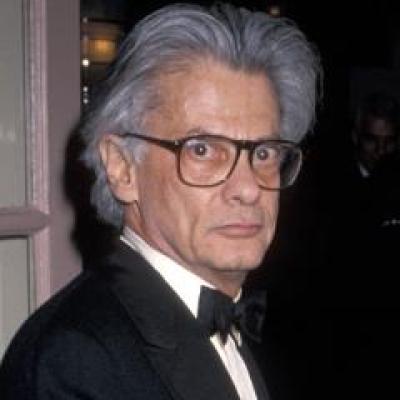
My photographs don't go below the surface. They don't go below anything. They're readings of the surface. I have great faith in surfaces. A good one is full of clues.
I've photographed just about everyone in the world. But what I hope to do is photograph people of accomplishment, not celebrity, and help define the difference once again.
It's not hard being great occasionally. It's difficult to be good consistently.
When I was a boy, my family took great care with our snapshots. We really planned them. We made compositions. We posed in front of expensive cars, homes, that werent ours. We borrowed dogs. Almost every family picture taken of us when I was young had a different borrowed dog in it.
When you pose for a photograph, it's behind a smile that isn't yours. You are angry and hungry and alive. What I value in you is that intensity. I want to make portraits as intense as people.
I hate cameras. They interfere, they’re always in the way. I wish: if I could just work with my eyes alone. To get a satisfactory print, one that contains all that you intended, is very often more difficult and dangerous than the sitting itself. When I’m photographing, I immediately know when I’ve got the image I really want. But to get the image out of the camera and into the open, is another matter.
Faces are the ledgers of our experience.
A photographic portrait is a picture of someone who knows he is being photographed
If I could do what I want with my eyes alone, I would be happy.
There was no such person as Marilyn Monroe. Marilyn Monroe was an invention of hers. A genius invention that she created, like an author creates a character. She understood photography, and she also understood what makes a great photograph. She related to it as if she were giving a performance. She gave more to the still camera than any actress-any woman- I've ever photographed.
Marilyn Monroe gave more to the still camera than any actress, any woman I've ever photographed; infinitely more patient, more demanding of herself and more comfortable in front of the camera than away from it.
I am, and forever will be, devastated by the gift of Audrey Hepburn before my camera. I cannot lift her to greater heights. She is already there. I can only record. I cannot interpret her. There is no going further than who she is. She has achieved in herself her ultimate portrait.
Snapshots that have been taken of me working show something I was not aware of at all, that over and over again I'm holding my own body or my own hands exactly like the person I'm photographing. I never knew I did that, and obviously what I'm doing is trying to feel, actually physically feel, the way he or she feels at the moment I'm photographing them in order to deepen the sense of connection.
Sometimes I think all my pictures are just pictures of me.
There's always been a separation between fashion and what I call my 'deeper' work. Fashion is where I make my living. I'm not knocking it. It's a pleasure to make a living that way. It's pleasure and then there's the deeper pleasure of doing my portraits. It's not important what I consider myself to be, but I consider myself to be a portrait photographer.
All photographs are accurate. None of them is the truth.
I know that the accident of my being a photographer has made my life possible.
A portrait is not a likeness. The moment an emotion or fact is transformed into a photograph it is no longer a fact but an opinion. There is no such thing as inaccuracy in a photograph. All photographs are accurate. None of them is the truth.
To be an artist, you have to nurture the things that most people discard.
You can't get at the thing itself, the real nature of the sitter, by stripping away the surface. You can only get beyond the surface by working with the surface. All that you can do is manipulate that surface - gesture, costume, expression - radically and correctly.
The pictures have a reality for me that the people don't. It is through the photographs that I know them.
There is no truth in photography. There is no truth about anyone's person.
I believe that you've got to love your work so much that it is all you want to do.
The moment an emotion or fact is transformed into a photograph it is no longer a fact but an opinion.
And if a day goes by without my doing something related to photography, it's as though I've neglected something essential to my existence, as though I had forgotten to wake up. I know that the accident of my being a photographer has made my life possible.
People — running from unhappiness, hiding in power — are locked within their reputations, ambitions, beliefs.
i'm beginning to feel like this. caught the incredible sunshine just in the nick of time today on my walk. the wall of rain approaching from the west desert was pretty spectacular, too. along with being gorgeous, it was sooo muddy. which made driving home in no shoes so very fun :) if only i could post photos here! a picture is worth a thousand words, yes? If a day goes by without my doing something related to photography, it's as though I've neglected something essential to my existence, as though I had forgotten to wake up.
i think charm is the ability to be truly interested in other people
I never wanted to be called an artist. I wanted to be called a photographer.
Just advertising departments with legs and high heels.
My parents put the New Yorker in my crib. I saw Vogue and Vanity Fair around the house before I could read.
How many pictures have you torn up because you hate them? What ends up in your scrapbook? The pictures where you look like a good guy and a good family man, and the children look adorable - and they're screaming the next minute. I've never seen a family album of screaming people.
I can see myself as a very old man in a terrific wheelchair. Only, I won't be photographing the tree outside my window, the way Steichen did. I'll be photographing other old people.
It's in trying to direct the traffic between Artiface [sic] and Candor, without being run over, that I'm confronted with the questions about photography that matter most to me.
A portrait isn't a fact but an opinion - an occasion rather than a truth.
I don't really remember the day when I stood behind my camera with Henry Kissinger on the other side. I am sure he doesn't remember it either. But this photograph is here now to prove that no amount of kindness on my part could make this photograph mean exactly what he.. or even I.. wanted it to mean. It's a reminder of the wonder and terror that is a photograph.
People, unprotected by their roles, become isolated in beauty and intellect and illness and confusion.
I think all art is about control, the encounter between control and uncontrollable.
For hours she danced and sang and flirted and did this thing that's-she did Marilyn Monroe. And then there was the inevitable drop. And when the night was over and the white wine was over and the dancing was over, she sat in the corner like a child, with everything gone. I saw her sitting quietly without expression on her face, and I walked towards her but I wouldn't photograph her without her knowledge of it. And as I came with the camera, I saw that she was not saying no.
I hate cameras. They interfere, they're always in the way. I wish: if I could work with my eyes alone.
Photography has always reminded me of the second child.. trying to prove itself. The fact that it wasn't really considered an art.. that it was considered a craft.. has trapped almost every serious photographer.
If each photograph steals a bit of the soul, isn't it possible that I give up pieces of mine every time I take a picture?
I see pictures of myself and I always knew that what I was feeling didn't look like that guy in the pictures.
I always prefer to work in the studio. It isolates people from their environment. They become in a sense... symbolic of themselves. I often feel that people come to me to be photographed as they would go to a doctor or a fortune teller - to find out how they are.
He sleeps fastest who sleeps alone.
I am always stimulated by people. Almost never by ideas.
My photographs don't go below the surface. They don't go below anything. They're readings of the surface. I have great faith in surfaces. A good one is full of clues. But whenever I become absorbed in the beauty of a face, in the excellence of a single feature, I feel I've lost what's really there been seduced by someone else's standard of beauty or by the sitter's own idea of the best in him. That's not usually the best. So each sitting becomes a contest.
I always prefer to work in the studio. It isolates people from their environment
One man's fantasy is another man's job.
Start with a style and you are in chains, start with an idea and you are free.
I've worked out of a series of no's. No to exquisite light, no to apparent compositions, no to the seduction of poses or narrative. And all these no's force me to the yes. I have a white background. I have the person I'm interested in and the thing that happens between us.
Sometimes I think all my pictures are just pictures of me. My concern is...the human predicament; only what I consider the human predicament may simply be my own.
Anything is an art if you do it at the level of an art.
We all perform. It's what we do for each other all the time, deliberately or unintionally. It's a way of telling about ourselves in the hope of being recognized as what we'd like to be.--PERFORMANCE
Camera lies all the time. It’s all it does is lie, because when you choose this moment instead of this moment, when you… the moment you’ve made a choice, you’re lying about something larger. Lying is an ugly word. I don’t mean lying. But any artist picks and chooses what they want to paint or write about or say. Photographers are the same.
A portrait photographer depends upon another person to complete his picture. The subject imagined, which in a sense is me, must be discovered in someone else willing to take part in a fiction he cannot possibly know about.
The way someone who's being photographed presents himself to the camera, and the effect of the photographer's response on that presence, is what the making of a portrait is all about.
A photographic portrait is a picture of someone who knows he's being photographed, and what he does with this knowledge is as much a part of the photograph as what he's wearing or how he looks. He's implicated in what's happening, and he has a certain real power over the result.
Real people move, they bear with them the element of time. It is this fourth dimension of people that I try to capture in a photograph.
My portraits are more about me than they are about the people I photograph.