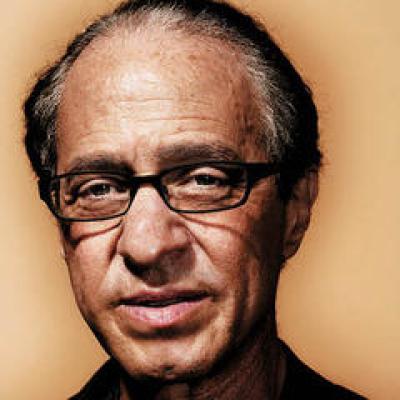
Evolution is a process of creating patterns of increasing order....I believe that it's the evolution of patterns that constitutes the ultimate story of our world. Evolution works through indirection: each stage or epoch uses the information-processing methods of the previous epoch to create the next.
We only have to capture 1/10,000th of the solar energy landing on earth to completely satisfy all our energy needs.
I consider myself an inventor, entrepreneur, and author.
The fate of the universe is a decision yet to be made, one which we will intelligently consider when the time is right.
What we spend our time on is probably the most important decision we make.
The need to congregate workers in offices will gradually diminish.
Death gives meaning to our lives. It gives importance and value to time. Time would become meaningless if there were too much of it.
If we could convert 0.03 percent of the sunlight that falls on the earth into energy, we could meet all of our projected needs for 2030.
My mission at Google is to develop natural language understanding with a team and in collaboration with other researchers at Google.
We're democratizing the tools of creativity.
A Singularitarian is someone who understands the Singularity and has reflected on its meaning for his or her own life.
Time would become meaningless if there were too much of it.
By the time we get to the 2040s, we'll be able to multiply human intelligence a billionfold. That will be a profound change that's singular in nature. Computers are going to keep getting smaller and smaller. Ultimately, they will go inside our bodies and brains and make us healthier, make us smarter.
I'm an inventor. I became interested in long-term trends because an invention has to make sense in the world in which it is finished, not the world in which it is started.
As we gradually learn to harness the optimal computing capacity of matter, our intelligence will spread through the universe at (or exceeding) the speed of light, eventually leading to a sublime, universe wide awakening.
By 2010 computers will disappear. They'll be so small, they'll be embedded in our clothing, in our environment. Images will be written directly to our retina, providing full-immersion virtual reality, augmented real reality. We'll be interacting with virtual personalities.
Emotional intelligence is what humans are good at and that's not a sideshow. That's the cutting edge of human intelligence.
The ethical debates are like stones in a stream. The water runs around them. You haven't seen any biological technologies held up for one week by any of these debates.
We appear to be programmed with the idea that there are 'things' outside of our self, and some are conscious, and some are not.
When you talk to a human in 2035, you'll be talking to someone that's a combination of biological and non-biological intelligence.
Sometimes people talk about conflict between humans and machines, and you can see that in a lot of science fiction. But the machines were creating are not some invasion from Mars. We create these tools to expand our own reach.
[In] 2029, I think, computers will match and exceed human intelligence in the ways we're now superior, like being funny, where we still have an edge.
There is one brain organ that is optimised for understanding and articulating logical processes and that is the outer layer of the brain, called the cerebral cortex. Unlike the rest of the brain, this relatively recent evolutionary development is rather flat, only about 0.32 cm (0.12 in) thick and includes a mere 6 million neurons. This elaborately folded organ provides us with what little competence we do possess for understanding what we do and who we do it.
In 1999, I said that in about a decade we would see technologies such as self-driving cars and mobile phones that could answer your questions, and people criticized these predictions as unrealistic.
The Singularity denotes an event that will take place in the material world, the inevitable next step in the evolutionary process that started with biological evolution and has extended through human-directed technological evolution. however, it is precisely in the world of matter and energy that we encounter transcendence, a principal connotation of what people refer to as spirituality.
It is doubling now every two years. Doubling every two years means multiplying by 1,000 in 20 years. At that rate we'll meet 100 percent of our energy needs in 20 years.
Information defines your personality, your memories, your skills.
Those with engineering skills will build tomorrow's genius computers. But those with the ability to create knowledge of any kind will be the ones who are best able to extract great value from them. The way to create value in the age of genius machines will be to compile and disseminate knowledge that other people will find useful.
Play is just another version of work
The telephone is virtual reality in that you can meet with someone as if you are together, at least for the auditory sense.
The purposeful destruction of information is the essence of intelligent work.
The profound aspect of technology is that once secrets are revealed, the magic doesn't disappear.
A successful person isn't necessarily better than her less successful peers at solving problems; her pattern-recognition facilities have just learned what problems are worth solving.
Humans feel deeply the suffering of their friends and allies and easily discount/dismiss the comparable experience of their enemies.
When I was a student at MIT, we all shared one computer and it took up a whole building. The computer in your cell phone today is a million times cheaper and a thousand times more powerful. What now fits in your pocket 25 years from now will fit into a blood cell and will again be millions of times more cost effective.
Machines will follow a path that mirrors the evolution of humans. Ultimately, however, self-aware, self-improving machines will evolve beyond humans' ability to control or even understand them.
Our intuition about the future is linear. But the reality of information technology is exponential, and that makes a profound difference. If I take 30 steps linearly, I get to 30. If I take 30 steps exponentially, I get to a billion.
Biological evolution is too slow for the human species. Over the next few decades, it's going to be left in the dust.
My view is that consciousness, the seat of "personalness," is the ultimate reality, and is also scientifically impenetrable. In other words, there is no scientific test one can postulate that would definitively prove its existence in another entity. We assume that other biological human persons, at least those who are at least acting conscious, are indeed conscious. But this too is an assumption, and this shared human consensus breaks down when we go beyond human experience (e.g., the debate on animal consciousness, and by extension animal rights).
We have the means right now to live long enough to live forever. Existing knowledge can be aggressively applied to dramatically slow down aging processes so we can still be in vital health when the more radical life-extending therapies from biotechnology and nanotechnology become available. But most baby boomers won't make it because they are unaware of the accelerating aging process in their bodies and the opportunity to intervene.
Science fiction is the great opportunity to speculate on what could happen. It does give me, as a futurist, scenarios.
Doing real world projects is, I think, the best way to learn and also to engage the world and find out what the world is all about.
I do have to pick my priorities. Nobody can do everything.
The key issue as to whether or not a non-biological entity deserves rights really comes down to whether or not it's conscious.... Does it have feelings?
To transcend means to "go beyond," but this need not compel us to an ornate dualist view that regards transcendent levels of reality (e.g., the spiritual level) to be not of this world. We can "go beyond" the "ordinary" powers of the material world through the power of patterns. Rather than a materialist, I would prefer to consider myself a "patternist." It's through the emergent powers of the pattern that we transcend.
By 2029, computers will have emotional intelligence and be convincing as people.
By 2009, computers will disappear. Displays will be written directly onto our retinas by devices in our eyeglasses and contact lenses.
All of our schools need to bring 'learn from doing' into the mainstream education, not just afternoon.
By the 2030s, the nonbiological portion of our intelligence will predominate.
Intuition is linear; our imaginations are weak. Even the brightest of us only extrapolate from what we know now; for the most part, we're afraid to really stretch.
Within a few decades, machine intelligence will surpass human intelligence, leading to The Singularity -- technological change so rapid and profound it represents a rupture in the fabric of human history. The implications include the merger of biological and nonbiological intelligence, immortal software-based humans, and ultra-high levels of intelligence that expand outward in the universe at the speed of light.
People talk philosophically, Oh, I don't want to live past 100.' You know, I'd like to hear them say that when they're 99.
Death is a great tragedy…a profound loss…I don’t accept it…I think people are kidding themselves when they say they are comfortable with death.
Nature, and the natural human condition, generates tremendous suffering. We have the means to overcome that, and we should deploy it.
A lot of movies about artificial intelligence envision that AIs will be very intelligent but missing some key emotional qualities of humans and therefore turn out to be very dangerous.
Find your passion, learn how to add value to it, and commit to a lifetime of learning.
Our technology, our machines, is part of our humanity. We created them to extend ourselves, and that is what is unique about human beings.
We'll be able to have very intelligent, little robots with computers going inside our bloodstream, keeping us healthy from inside, destroying cancer at the level of one cell.
There are downsides to every technology. Fire kept us warm, but also burned down our villages.
Even by common wisdom, there seem to be both people and objects in my dream that are outside myself, but clearly they were created in myself and are part of me; they are mental constructs in my own brain.
Although I'm not prepared to move up my prediction of a computer passing the Turing test by 2029, the progress that has been achieved in systems like Watson should give anyone substantial confidence that the advent of Turing-level AI is close at hand. If one were to create a version of Watson that was optimized for the Turing test, it would probably come pretty close.
Biology is a software process. Our bodies are made up of trillions of cells, each governed by this process. You and I are walking around with outdated software running in our bodies, which evolved in a very different era.
Does God exist? Well, I would say, 'not yet'.
I'm working on artificial intelligence. Actually, natural language understanding, which is to get computers to understand the meaning of documents.
Mobile phones are misnamed. They should be called gateways to human knowledge.
Intelligence is: (a) the most complex phenomenon in the Universe; or (b) a profoundly simple process. The answer, of course, is (c) both of the above. It's another one of those great dualities that make life interesting.
So what used to fit in a building now fits in your pocket, what fits in your pocket now will fit inside a blood cell in 25 years.
By the time of the Singularity, there won't be a distinction between humans and technology. This is not because humans will have become what we think of as machines today, but rather machines will have progressed to be like humans and beyond. Technology will be the metaphorical opposable thumb that enables our next step in evolution.
As you go out to the 2040s, now the bulk of our thinking is out in the cloud. The biological portion of our brain didn't go away but the nonbiological portion will be much more powerful. And it will be uploaded automatically the way we back up everything now that's digital.
I envision some years from now that the majority of search queries will be answered without you actually asking. It'll just know this is something that you're going to want to see.
The story of evolution unfolds with increasing levels of abstraction.
Launching a breakthrough idea is like shooting skeet. People's needs change, so you must aim well ahead of the target to hit it.
Supercomputers will achieve one human brain capacity by 2010, and personal computers will do so by about 2020.
The past is over; the present is fleeting; we live in the future.
With the increasingly important role of intelligent machines in all phases of our lives--military, medical, economic and financial, political--it is odd to keep reading articles with titles such as Whatever Happened to Artificial Intelligence? This is a phenomenon that Turing had predicted: that machine intelligence would become so pervasive, so comfortable, and so well integrated into our information-based economy that people would fail even to notice it.
By the end of this decade, computers will disappear as distinct physical objects, with displays built in our eyeglasses, and electronics woven in our clothing, providing full-immersion visual virtual reality.
Inventing is a lot like surfing: you have to anticipate and catch the wave at just the right moment.
What we found was that rather than being haphazardly arranged or independent pathways, we find that all of the pathways of the brain taken together fit together in a single exceedingly simple structure. They basically look like a cube. They basically run in three perpendicular directions, and in each one of those three directions the pathways are highly parallel to each other and arranged in arrays. So, instead of independent spaghettis, we see that the connectivity of the brain is, in a sense, a single coherent structure.
Take death for example. A great deal of our effort goes into avoiding it. We make extraordinary efforts to delay it, and often consider its intrusion a tragic event. Yet we'd find it hard to live without it. Death gives meaning to our lives. It gives importance and value to time. Time would become meaningless if there were too much of it.
The software programs that make our body run ... were evolved in very different times. We'd like to actually change those programs. One little software program, called the fat insulin receptor gene, basically says, 'Hold onto every calorie, because the next hunting season may not work out so well.' That was in the interests of the species tens of thousands of years ago. We'd like to turn that program off.