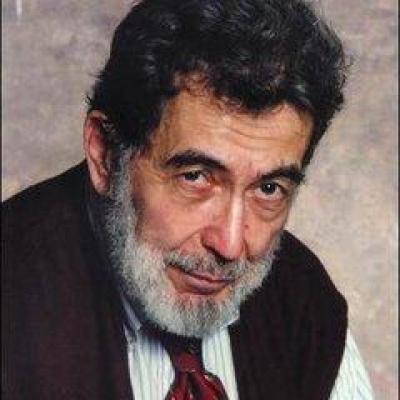
There is a seamless web to life.. all life is sacred.
The people I admire are those who keep on producing and working and going on.
[A.J. Muste] was very influenced - in - influential in the peace movement, in the civil rights movement.
[Max Askeli] started this very good magazine [The Reporter]. In fact, Meg Greenfield, who's now the editorial page editor of The Washington Post, was one of the star reporters there.
[A.J. Muste] was from Michigan and he grew up in the Dutch Reform Church there, which is a fairly strict church. He later came to New York. He was the minister of a labor temple in the - on the East Side. Then he founded, to my knowledge, the first, maybe the only, labor school; that is, Cornell has a labor department and other schools. But this was a school for - entirely for labor organizers, and he was the - the chairman.
Max Askeli was a very courageous, principled man up to a point. He had left Italy before he was thrown in jail by [Francesco] Mussolini.
The need for education for the individual student should be recognized... home, neighborhood. But instead of that, we have the future being determined by standardized testing.
[Barack] Obama seems to have no firm principles that I can discern that he will adhere to.
I always wanted to be a lawyer,but I certainly never wanted to be a trapeze performer.
We are going to have a long period where people are accustomed or conditioned to what's going on now with the raping of the Fourth Amendment.
I was co-editor of the magazine called The Jazz Review, which was a pioneering magazine because it was the only magazine, then or now, in which all the articles were written by musicians, by jazz men. They had been laboring for years under the stereotype that they weren't very articulate except when they picked up their horn.
I have I guess 3 passions. One is the Constitution. The other is jazz and the other is being an atheist prolifer which, of course, gets me in a lot of trouble - all of which combines into free expression.
In terms of the Patriot Act, and all the other things he has pledged he would do, such as transparency in government,[Barack] Obama has reneged on his promises.
The need for a pro-life point of view undergirds everything you do.
I have been in schools around the country, and I have written on education for years. Once, I was once doing a profile on Justice William Brennan and I was in his chambers, and Brennan asked, "How do we get the words of the Bill of Rights into the lives of the students?" Well, it is not difficult. You tell them stories.
What we have now in America is a surveillance society.
Even on the cable network MSNBC, some of the strongest proponents of [Barack] Obama are now beginning to question, if I may use their words, their "deity."
I was less angry at [Carl] Armstrong, though I was angry at the people who came to his trial: Dan Ellsberg, who ordinarily I respected a lot; Philip Berrigan; the guy who teaches at Princeton still - I can't remember his name. And they were saying - well, they were saying, really, what Arthur Koestler had people saying on "Darkness at Noon." The means were unfortunate and, sadly, someone died, but the end is what is important and this was a great symbolic - something or other - sign against the war in Vietnam.
Martin Williams persistently gets at essences, and that is why he has contributed so much to the very small body of authentic jazz criticism.
Every life is different; being pro-life is not only about saving the fetus, being pro-life is about all the stages of life.
[Barack Obama] pledged to end torture, but he has continued the CIA renditions where you kidnap people and send them to another country to be interrogated.
Young people get very excited when they hear why they are Americans. It is not hard to do.
Americans have only the dimmest notion of what their constitutional freedoms are - and what it took to get them...[and] the willingness to surrender what we're supposed to be fighting for is a recurring part of our history.
Great pressure was put on the editor, David Schneiderman, to not run the strip [of Jules Feiffer]. It was offensive. It was racist. And nobody apparently read the strip and saw what it was about. And I wrote a column about that.
I say personally because I am 84 years old, and [Barack Obama's] is the first administration that has scared me in terms of my lifespan.
The death panel issue arose with Tom Daschle, who was originally going to be the Health Czar. Daschle became enamored with the British system and wrote a book about health care, which influenced President [Barack] Obama.
[Bill Clinton] was the man, as a matter of fact, who, in terms of the Communications Decency Act, which would have made the Internet, the whole concept of cyberspace, vulnerable to rampant censorship - he pushed that bill, and I know the man in the Justice Department whom he persuaded - the guy didn't want to lose his job - to write the bill.
If [Bill Shawn] liked the piece, then he would run it. But he wanted the magazine to be something that was more than just a weekly event. And as a result you could pick up a New Yorker under him, as I mentioned before, a year from then or 10 years or 20 years and there would always be something worth reading in it.
The [George W.] Bush administration would go into court on any kind of a case that they thought might embarrass them and would argue that it was a state secret and the case should not be continued.[Barack] Obama is doing the same thing, even though he promised not to.
Bob Dylan was really mad with my wife. I had asked by Rolling Stone - the only assignment I ever had for them - to do a story on the Rolling Thunder Review, which was Bob Dylan, Alan Ginsberg, Joan Baez and a host of stars. My wife, some weeks before, had written in The New York Times that The Kid wasn't The Kid anymore and he wasn't all that winning anymore.
My parents were Orthodox Jews but not very regular Orthodox Jews. I was bar mitzvahed and all that. But God was hardly ever mentioned in my family. Franklin D. Roosevelt was.
One of the worst elements of Obama's career, which no one talks about, is that he voted twice for a bill that said, if there is a botched abortion, if the child emerges from the womb alive, it should be okay to kill the baby. We have elected a president - twice! - who agrees with infanticide.
We disagree heavily on abortion [with Margot Hentoff].
I would bet there is no place in the United States where the First Amendment would survive intact.
[Bill Shawn] had always been in The New Yorker immaculately dressed - quietly, immaculately dressed, very soft-spoken. On the phone I could hardly hear him sometimes.
I knew A.J. Muste very well. I tried for a while to be like he was, and that is a total pacifist. But then Margot [my wife] hit me hard in the stomach one day to prove to me that I wasn't as perfect a pacifist as I thought I was.
I've been reading since I could read, which was about four or five years old.
Those who created this country chose freedom. With all of its dangers. And do you know the riskiest part of that choice they made? They actually believed that we could be trusted to make up our own minds in the whirl of differing ideas. That we could be trusted to remain free, even when there were very, very seductive voices - taking advantage of our freedom of speech - who were trying to turn this country into the kind of place where the government could tell you what you can and cannot do.
You have to be careful about what you do, about what you say, and that is more dangerous than what was happening with [John] McCarthy, but the technology the government now possesses is so much more insidious.
We need to keep trying to rescue the Constitution from the President.
My contact with [Cato] was strange. They're ideologues, like Trotskyites. All questions must be seen and solved within the true faith of libertarianism, the idea of minimal government. And like Trotskyites, the guys from Cato can talk you to death.
The person who has the strong ownership of free speech is the one who owns the press.
Liberalism isn't quite as liberal as it pretends to be. And it goes through my adventures with the FBI during the anti-war period and the civil rights period.
Sandra Day O'Connor - once she said that there are - there were no public schools in America until the 18th century, and she overlooked my alma mater because we started - I say we - in 1635. And among the people who went there - and they're on - the walls in the auditorium, the names are: Ralph Waldo Emerson and Cotton Mather, Benjamin Franklin, except he split when he was 10 years old to go to work.
I went to a lecture of [Arthur Koestler ] once, I never met him.
I was in the back of the book [in the The Reporter] doing music.
A reporter is never put off by somebody not wanting to be interviewed.
I say this because the Left has taken what passes for their principles as an absolute religion. They don't think anymore. They just react. When they have somebody like [Barack] Obama whom they put into office, they believed in the religious sense and, of course, that is a large part of the reason for their silence on these issues.
Why has slamming a ball with a racquet become so obsessive a pleasure for so many of us? It seems clear to me that a primary attraction of the sport is the opportunity it gives to release aggression physically without being arrested for felonious assault.
[Arthur Koestler] wrote some other very interesting books, but that book - I mean, if I were teaching, I don't care what the course is, I would say you really have to read "Darkness at Noon".
[My father] was very impressed when he saw "Death of a Salesman," I must say. He recognized himself to some extent.
I think Obama is possibly the most dangerous and destructive president we have ever had
I went to the library as soon as I could walk. So the training came from reading all kinds of people, from fairy tales and later on to - I don't know why - Schweitz's "Life of Christ."
There wasn't much said, but I was thinking, perhaps unkindly - not unkindly,but on - inaccurately of Theodore Dreiser's "Carrie," when the main character in "Carrie" has been brought down by Carrie and his - he - dress is disheveled and all that sort of thing. And that's the last I ever saw of [Will Shawn].
Lilian Ross was a - veteran writer for The New Yorker. She, in fact, brought me to The New Yorker many years ago.
The media has been very bad about informing us about what is going on. They focus on surface things. They do not focus enough on the fact that the Fourth Amendment is on life support and that we need a return to transparency in government.
The ACLU sees the separation of church and state as so absolute that not a single religious word must be allowed to pass a schoolhouse door.
A.J.[Muste] died in the late '60s, I think. He was 81, something like that.
[Left] are very hesitant to criticize [Barack] Obama, but that is beginning to change.
A particular moment - and I'm not, to this day, quite sure how I feel about it - I had always wanted to be in the law books - you know, Hentoff vs. something or other.
Means and ends are central. If your means are corroded, your ends will be corroded. And if you're fighting to preserve liberty and you use means that eviscerate our liberties, the end will be corroded, too.
Throughout [Barack] Obama's career, he promised to limit the state secrets doctrine which the Bush-Cheney administration had abused enormously.
I told [a big investor in The New Yorker] - I was complaining the way writers complain.I said`[Bill Shawn] pays very well, but a lot of my pieces don't get in,' and that was true of most of the writers there.But he pays you for them, that was very nice of him. This guy didn't think it was very nice. He figured, `Oh, my God, that's more of my investment gone,' and paying money to writers for not printing them. That became, apparently, one of his weapons against Shawn when he - in the corporate skirmishes that went on. It was a bad mistake on my part.
After [Bill Shawn] was fired, I was going to the YMHA [Young Men's Hebrew Association] on the Upper East Side to do a talk on free speech.I went into a coffee shop to get a piece of pie and a coffee, and I was reading a paper and I hear a voice. And it was -it was not a voice I was familiar with, but I looked across the table and I saw Lilian Ross.And sitting next to her was William Shawn - no tie, needed a shave. His voice was kind of coarse and rather loud. He wasn't drunk, but I was just stunned.
The media ignores what is really going on.
We hear talk now about reforming public education. There are billions of dollars at stake for such a reform. But I have not heard Arne Duncan, who is the U.S. Education Secretary, mention once the civic illiteracy in the country.
When I was a kid in Boston, it was one of the most anti-Semitic cities in the country. If you were living in the ghetto as I was, the Jewish ghetto part of Roxbury, and you went out alone at night, you might be subject to having people attacking you for being a Christ killer.
We have no idea how much the government knows and how much the CIA even knows about average citizens. The government is not supposed to be doing this in this country. They listen in on our phone calls. I am not exaggerating because I have studied this a long time.
Fortune ought to be a National Endowment for the Arts Jazz Master.
Fortunately most of the people who were involved in anti-Vietnam activity did not con themselves into being like the violent people they didn't want.
Miranda [Hentoff] is a complete musician. She's a composer, a singer. She writes scripts along - with her projects. And she's a superb teacher. Her teaching pupils have ranged from Itzhak Perlman to Sting.
Under the British healthcare system, there is a commission that decides whether or not, based on your age and physical condition, the government should continue to pay for your health.
He has absolutely no judicial supervision of all of this [ invasions of privacy ]. So all in all, [Barack] Obama is a disaster.
[Margot Hentoff] was an editor there for a time as well as a writer.
This book, "Speaking Freely," starts when I came to New York. And the first chapter is about a man who became a friend of mine, much to our mutual surprise, Malcolm X.
This sounds corny, but I once told a kid when I was in a the library conference, the best - not the best, what I really hope for is that someday 20, 30 years from now, some kid, 12-year-old, 15-year-old, in Des Moines will be going through the stacks, if they have stacks anymore - they probably won't - and find a book of mine and get something from it.
[My wife Margot] was the - I guess, the coordinator or the production manager [of The Jazz Review], and we got to know each other and we married.
They [FBI] had a lot of clippings, a lot of articles I'd written. And to me the - the funniest one was - I had done a piece for Playboy about J. Edgar Hoover.
William Shawn was the editor of The New Yorker and for whom I worked for, God, 27 years; a man I respected enormously because of what he did, - what the magazine was about.
I know [Arthur Koestler] fought in the Spanish Civil War. He was in prison, I think, in Spain and in Russia. He came to the United States; that's when I saw him in the mid-1940s.
In the recent Virginia election, the black vote diminished. Now why was that? I think a lot of black folks are wondering what this guy is really going to do, not only for them but for the country. If the country is injured, they will be injured. That may be sinking in.
The book that really, really shaped my politics and has forever is Arthur Koestler's "Darkness at Noon," which is a novel based on terrible fact about what it was like in Russia during Stalin's time when people actually believed that to get to the point where the Proletariat would triumph, anything that was necessary to be done should be done; the means didn't count.
[Madness] happened so frequently. I think what I was most maddest about - and it's in the book [Speaking Freely: A Memoir] - when the House and the Senate, back in 1984, were debating a bill that would - at least delay and maybe stop some of the ex - summary execution of disabled children - infants. And the Down syndrome kids and other kids had been, in some cases, routinely let die, to use the euphemism.
I was writing - at least beginning to write Boston Boy and there were a lot of holes in my so-called research. I didn't know the towns my mother and father came from in Russia. I didn't know the name of the clothing store I went to work for when I was 11 years old. I didn't know a lot of things. So I called for my FBI files, not expecting to have that stuff there, but I wanted to know what they had on me.But they did have the towns my mother and father lived in in Russia. They had the grocery store I worked in when I was 11 years old.
Now that is dangerous, when the people don't know what's happening to their Constitution.
[Bill Shawn] didn't edit the writers very strongly, but he knew what he wanted.
I was very much against the Vietnam War, and Max Askeli was visiting Lyndon Johnson in the White House cheering him on, writing editorials. And in The Voice one day I once referred to him as Commander Askeli. And I called in to The Reporter to go over the galleys of a music piece I had written, and the editor whispered to me, `It's not gonna run. You're not gonna run. Max Askeli has fired you because of what you said about him.'
Being pro-life is an essential part of being a writer.
A woman in the audience asked [Barack] Obama about her mother. Her mother was 101 years old and was in need of a certain kind of procedure. Her doctor didn't want to do it because of her age. However, another doctor did and told this woman there is a joy of life in this person. The woman asked President Obama how he would deal with this sort of thing, and Obama said we cannot consider the joy of life in this situation. He said I would advise her to take a pain killer. That is the essence of the President of the United States.
[Barack Obama's ] only principle is his own aggrandizement. This is a very dangerous mindset for a president to have.
The main jobs would be The New Yorker, The Village Voice, The Washington Post and - I'm thinking of The Reporter when Max Askeli was there, but I got fired from The Reporter.
Being pro-life is a basic perspective of everything I do.
That term was used with hyperbole about the parts of the health care bill where doctors are mandated, if people are on Medicare and of a certain age or in serious physical condition, to counsel them on their end-of-life alternatives. I don't believe that was a death panel.
Duke Ellington had a song, "What Am I Here For?" - this is what being pro-life is.
I am an atheist, although I very much admire and have been influenced by many traditionally religious people.
I grew up in a household in which we had a clock that we won at Revere Beach during the Depression - one of those brass clocks that didn't work - but it showed Franklin D. Roosevelt standing at the wheel of the New Deal.
I read like everybody - like every other writer.
[George W.] Bush was led astray and we were led astray.
I was introduced to jazz, and that's become a basic concern and passion of mine ever since.
I am hesitant to say this about [Barack] Obama. Obama is a bad man in terms of the Constitution.
[I have ] two boys. One, Nicholas, is a criminal defense attorney in Phoenix in which he - gets into - a lot of very controversial cases. He has sued Sheriff Arpaio, the famous sheriff who keeps people in tents, gives them green bologna and the like. My other son Tom is with Williams & Connolly in Washington, where he does intellectual property defamation cases.
If the American people have their health care paid for by the government, depending on their age and their condition, they will be subject to a health commission just like in England which will decide if their lives are worth living much longer.
I wrote the column. I - you know, - the column simply said that [Clay] Felker is destroying this paper. And I heard that he was about ready to fire me, but two other people on The Voice interceded and, fortunately, he had a very short attention span, so I wasn't fired.
I found out - the paper used to go to bed on Tues - on Monday. I found out that on Monday nights, the editors would cut out - literally cut out passages, sometimes whole paragraphs, of some of the writers that might possibly offend blacks, lesbians, gays, radicals. And I wrote a couple of columns about that. And they're - of course, they were annoyed that I had written about it, but, I mean, it - another example - and [my wife Margot] always also conjured that.
Tom [Hentoff] - it started when he was the editor of the paper at Wesleyan and the - members of the staff. This was the first wave of political correctness. The editors of the staff members came and said he must - he must, from now on, stop using `freshmen' and - in-as part of the policy of the paper. It had to be `freshperson.' Therefore, you don't - you're not discriminating against males or females. They were very fervent about that, and he was equally fervent about not politicizing language. So until he left, `freshmen' stayed.
A lot of people in the adult population have a very limited idea as to why they are Americans, why we have a First Amendment or a Bill of Rights.
When I speak to students, I tell them why we have a First Amendment. I tell them about the Committees of Correspondence. I tell them how in a secret meeting of the Raleigh Tavern in Virginia, Thomas Jefferson and Patrick Henry, who did not agree with each other, started a Committee of Correspondence.
There's a black lawyer in Galveston, Texas, who was the unpaid NAACP general counsel in Texas. He had a great record in housing discrimination, labor discrimination. He decided to take as a client a member of the Ku Klux Klan because the state wanted to get the membership lists of the Klan to find out if they could get something on the Klan. And he said, `I got to take you. I despise you. But we, the NAACP, won that case; NAACP vs. Alabama in the 1950s. Nobody has the right to get your membership lists.' He was fired from the NAACP. To me, he's a hero.
[Barack Obama to be] much worse [than George W. Bush].
I was lecturing at the Columbia Journalism School of Education. I asked them about what was happening to the Fourth Amendment. I said, "By the way, do you know what is in the Fourth Amendment?" One student responded, "Is that the right to bear arms?" It's hard to believe these are bright students.
The NSA has the capacity to keep track of everything we do on the phone and on the internet.[Barack] Obama has done nothing about that.
A liberal was somebody who expected and hoped that government would help the poor - you know, that whole routine. I did not know then and I've learned since that in an area that means a lot to me, free speech, liberals are as bad as many conservatives in trying to censor speech.
I got a letter one day from somebody saying, `You're always criticizing the press. Why don't you talk about what Clay Felker is doing to your own paper [The Voice]?' And my 10-year-old son Tom, now with Williams & Connelly, put in a legal opinion, not - an opinion from the back of the car saying, `You know why? What are you, afraid?' So I wrote the column. I - you know, - the column simply said that Felker is destroying this paper.
[Miranda Hentoff] was teaching once at Lincoln Center, and the hall was full of other professionals - musicians, professors, teachers. And she was explaining how [Béla] Bartok composed his second piano concerto. And she explained how the music was interwoven with the rhythms and what he had in his mind. And I was just stunned. This is a kid who used to work - on a piano with a cracked keyboard.
[Barack] Obama has little, if any, principles except to aggrandize and make himself more and more important.
Carl Armstrong was one of those people in the anti-war years who had been so convinced of the righteousness of their cause that he and some friends decided they would blow up a building at the University of Wisconsin, in which they said research was being done to help the war against the Vietnamese. What they blew up at three or four in the morning was a young scientist, who was married and had a couple of kids, who wasn't working on war stuff at all. And he was killed.
We live in the village. We have a summer place in Westport, Connecticut. We don't spend a lot on all kinds of things. But I have no complaints.
I had not been very kind to J. Edgar Hoover. And the field agent had written on - it was sent directly to Hoover - that - the director should see this - `And, besides, Hentoff is a lousy writer.' And I thought that went a bit far.
Do not categorize about music. You take each musician at the time and open yourself to that musician.
Trotsky found out about him - Leon Trotsky - because A.J.[Muste] worked. He was an activist. And he organized the first sit-in strike in Toledo in a factory. And Trotsky was very impressed with that.
However, I never thought that [George W.] Bush himself was, in any sense, "evil."
In England, you have what I would call government-imposed euthanasia
Abortion happens because of economic circumstances.
The Voice has been politically correct in many of its aspects since before that term was ever used.
I am optimistic. I have to be optimistic.