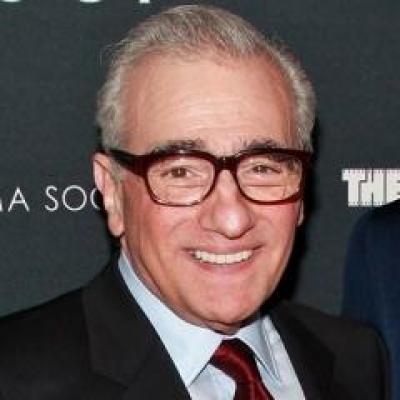
Being a father at a later age is different from when I had my other two daughters when I was in my 20s and 30s. If you're in your 60s and you're with the kid every day, you're dealing with the mind of a child, so it opens up that childishness in you again.
I'm in a different chapter of my life. As time goes by and I grow older, I find that I need to just be quiet and think. There have been periods when I've locked myself away for days, but now it's different - I'm married and we have a daughter who is in my office the whole time.
I look for a thematic idea running through my movies and I see that it's the outsider struggling for recognition. I realize that all my life I've been an outsider, and above all, being lonely but never realizing it.
I love movies - it's my whole life, and that's it.
Young film makers should learn how to deal with the money and learn how to deal with the power structure. Because it is like a battle.
When I'm making a film, I'm the audience.
If you’re looking for the origins of film culture in America, look no further than Amos Vogel.
If I'm not complaining, I'm not having a good time, hah hah!
The cinema began with a passionate, physical relationship between celluloid and the artists and craftsmen and technicians who handled it, manipulated it, and came to know it the way a lover comes to know every inch of the body of the beloved. No matter where the cinema goes, we cannot afford to lose sight of its beginnings.
DAYS THAT I'LL REMEMBER is a lovingly assembled and beautifully written collection of conversations, observations, and memories of music, friendship, and days gone by. It's good to be back again with John Lennon, his beloved Yoko Ono, and his trusted chronicler and friend Jonathan Cott.
The most important thing is, how can I move forward towards something that I can't articulate, that is new in storytelling with moving images and sound?
More than ninety percent of directing a picture is the right casting
There is something particularly unique about the films of Hong Sang-soo...it's got to do with his masterful sense of storytelling... as the critic Manny Farber once said of Hitchcock's ROPE Hong Sang-soo's pictures unpeel like an orange.
I love studying Ancient History and seeing how empires rise and fall, sowing the seeds of their own destruction.
Oh, the foghorns... even the foghorns, they're all brass. It's something by Ingrid Marshal called Fog Tropes. It's not a sound effect. It's an actual piece of music. If you listen to what's going on after he has a flashback about his wife you'll hear... it sounds like the humpback whales in a way. But it's all music. And we use it again later, too.
If we just sit and exist, and understand that, I think it will be helpful in a world that seems like a record that's going faster and faster, we're spinning off the edge of the universe.
Your job is to get your audience to care about your obsessions.
And as I've gotten older, I've had more of a tendency to look for people who live by kindness, tolerance, compassion, a gentler way of looking at things.
People want to classify and say, 'OK, this is a gangster film.' 'This is a Western.' 'This is a... ' You know? It's easy to classify and it makes people feel comfortable, but it doesn't matter, it doesn't really matter.
Working with HBO was an opportunity to experience creative freedom and 'long-form development' that filmmakers didn't have a chance to do before the emergence of shows like 'The Sopranos.'
If you don’t like the films of Samuel Fuller , then you just don’t like cinema.
The more you see, especially being young, the more you see the past, the more you can draw upon that and the more you can make the present and the future. It's how you process the past and at oftentimes in the picture, there are references to certain imagery from certain pictures, and certain novels.
I prefer people who don't get caught, and if they do get caught, I prefer people who don't give in.
Zombies, what are you going to do with them? Just keep chopping them up, shooting at them, shooting at them.
Watching a Kubrick film is like gazing up at a mountaintop. You look up and wonder, how could anyone have climbed that high?
You don't make pictures for Oscars.
Food tells you everything about the way people live and who they are.
You don't make up for your sins in church. You do it in the streets. You do it at home. The rest is bullshit and you know it.
Sometimes God picks you up and tells you, "You've been messing around now. You're going to have to stop this, stop that, but I'll give you another chance." And you wonder why you're given another chance. It must be for something; it must be to celebrate life.
The first element that I connected with was the emotion. Sorry, that's how it goes.
I'd like to do a number of films. Westerns. Genre pieces. Maybe another film about Italian Americans where they're not gangsters, just to prove that not all Italians are gangsters.
I'm trying not to let the anger and the violence that erupt take over my life. I guess it comes with the growing process, I don't know. A little mellowing.
I have a desire to tell stories. And I'm never quite satisfied.
I didn't realize there are generations who do not know about the origins of film.
Violence is not the answer, it doesn’t work any more. We are at the end of the worst century in which the greatest atrocities in the history of the world have occurred... The nature of human beings must change. We must cultivate love and compassion.
I'm obsessed with New York. I just find it so remarkable. You really treasure this city when you go to different countries and you see that there is no mix. When you get back to the city, it's such an exciting place.
Always get to the set or the location early, so that you can be all alone and draw your inspiration for the blocking and the setups in private and quiet.
You've got to love something enough to kill it.
The only way I was able to defend myself was to be able to take punishment. Then I got a lot of respect. They said, "Oh, he's okay, he can take it. Don't hit him." The guys were pretty big, and I had asthma.
There must be people who remember World War II and the Holocaust who can help us get out of this rut.
I always tell the younger filmmakers and students: Do it like the painters used to...Study they old masters. Enrich your palette. Expand the canvas. There's always so much more to learn.
That subject matter has never left me...The more you're in the material world, the more there is a tendency for a search for serenity and a need to not be distracted by physical elements that are around you.
If your mother cooks Italian food, why should you go to a restaurant?
Our world is so glutted with useless information, images, useless images, sounds, all this sort of thing. It's a cacophony, it's like a madness I think that's been happening in the past twenty-five years. And I think anything that can help a person sit in a room alone and not worry about it is good.
The term 'giant' is used too often to describe artists. But in the case of Akira Kurosawa, we have one of the rare instances where the term fits.
Sometimes when you're heavy into the shooting or editing of a picture, you get to the point where you don't know if you could ever do it again.
You've got to protect whatever creative talent you have left.
The tone of the picture and the atmosphere was in my head and in my blood in a way once I'd decided to make the picture. I had to find my way through that to choose, select, emphasise certain visual elements and sound.
People have to start talking to know more about other cultures and to understand each other.
I don't know how else to tell the story except to utilise that vocabulary: the rain, the darkness, the mansions, the framing, etc, the lighting and that sort of thing.
People say you should do it this way, someone else suggests that, yes, there's financing, but maybe you should use this actor. And there are the threats, at the end - if you don't do it this way, you'll lose your box office; if you don't do it that way, you'll never get financed again... 35, 40 years of this, you get beat up.
I loved the idea of seeing the world through a boy's eyes.
My whole life has been movies and religion. That's it. Nothing else.
A panoramic vision of Bob Dylan, his music, his shifting place in American culture, from multiple angles. In fact, reading Sean Wilentz's Bob Dylan in America is as thrilling and surprising as listening to a great Dylan song.
I don't agree with everything he did in his life, but we're dealing with this Howard Hughes, at this point. And also ultimately the flaw in Howard Hughes, the curse so to speak.
We’re face to face with images all the time in a way that we never have been before... Young people need to understand that not all images are there to be consumed like fast food and then forgotten – we need to educate them to understand the difference between moving images that engage their humanity and their intelligence, and moving images that are just selling them something.
It’s also true that I might have never made Taxi Driver [1976] were it not for the success of Alice [Doesn’t Live Here Anymore, 1974]. The question of commercialism is a source of worry. Must one make a choice, must it be a matter of either setting your sights on winning an Academy Award and becoming a millionaire, or making only the movies you want to make and starving to death?
There are two kinds of power you have to fight. The first is the money, and that's just our system. The other is the people close around you, knowing when to accept their criticism, knowing when to say no.
I've been thrown out of schools and fired from jobs. I don't want to work. I can honestly say I haven't done an honest day's work in my life.
It's interesting that these themes of crime and political corruption are always relevant.
There's no such thing as simple. Simple is hard.
It seems to me that any sensible person must see that violence does not change the world and if it does, then only temporarily.
Howard Hughes was this visionary who was obsessed with speed and flying like a god... I loved his idea of what filmmaking was.
You have to put yourself in a situation, a lifestyle, that makes you do the work. Even if it's a monastery.
Sam Fuller and 'Shock Corridor' can only be conjured as a mantra. 'Shock Corridor' is a classic work of art - it's unique. It comes from the unique experience of being Sam Fuller and yes, there's always that element of 'Shock Corridor' hovering around the picture, but never specifically. In fact, I didn't even screen it because it's in us. It's in me anyway. It's in me. It was a way of conjuring up support just by saying the name, 'Shock Corridor,' as I was going to shoot. Poor Sam [Fuller]...
The creation of the island, or the impression of the island, as it changes in the mind of the character also came in to play... there was another very important collaborator, Rob Legato, on special visual effects. And then ultimately there's Thelma Schoonmaker, who keeps me focused during the editing of the picture.
I've seen many, many movies over the years, and there are only a few that suddenly inspire you so much that you want to continue to make films.
There was always a part of me that wanted to be an old-time director. But I couldn't do that. I'm not a pro.
Any film, or to me any creative endeavour, no matter who you're working with, is, in many cases, a wonderful experience.
Could you double-check the envelope?
During Prohibition, Atlantic City created the idea of the speakeasy, which turned into nightclubs and that extraordinary political complexity and corruption coming out of New Jersey at the time. The long hand that they had-and maybe still do-even had to do with presidential elections.
There's a way that the force of disappointment can be alchemized into something that will paradoxically renew you.
The most important thing is the script.
Michael Jackson was extraordinary. When we worked together on 'Bad,' I was in awe of his absolute mastery of movement on the one hand, and of the music on the other. Every step he took was absolutely precise and fluid at the same time. It was like watching quicksilver in motion. He was wonderful to work with, an absolute professional at all times, and it really goes without saying... a true artist. It will be a while before I can get used to the idea that he's no longer with us.
Actually, I was rock climbing on this film at 7 in the morning. It was quite unique! But in any event, the colour of the leaves disturbed me so we had to work on that. On the other hand, I didn't want to drench it in a kind of depressing tone.
When I was growing up in the mid-'50s, the Roaring Twenties were a huge part of the culture. There were a number of films and a bunch of television shows that dealt with the mythology of the underworld from that period.
I tried for about two semesters in a preparatory seminary. But I was about 15 and didn't fully understand what a vocation means.
Every scene is a lesson. Every shot is a school. Let the learning continue.
I always wanted to make a film that had this sort of Chinese-box effect, in which you keep opening it up and opening it up, and finally at the end you're at the beginning.
The storyboard for me is the way to visualise the entire movie in advance.
Always get to the set or the location early, so that you can be all alone and draw your inspiration for the blocking and the setups in private and quiet. In one sense, it's about protecting yourself; in another sense, it's about always being open to surprise, even from the set, because there may be some detail that you hadn't noticed. I think this is crucial. There are many pictures that seem good in so many ways except one: They lack a sense of surprise, they've never left the page.
Film in the 20th century, it's the American art form, like jazz.
I'm often asked by younger filmmakers, 'Why do I need to look at old movies?' I've made a number of pictures in the last 20 years and the response I have to give them is that I still consider myself a student. The more pictures I've made in 20 years, the more I realize I really don't know. And I'm always looking for something or someone that I could learn from. I tell the younger filmmakers, and the young students, that do it like painters used to do—that painters do—study the old masters, enrich your palette, expand the canvas. There's always so much more to learn.
I’m not interested in a realistic look, not at all, not ever. Every film should look the way I feel.
I always say that I've been in a bad mood for maybe 35 years now. I try to lighten it up, but that's what comes out when you get me on camera.
There are movies that change the whole way in which films are made, like Klute, where Gordon Willis’s photography on the film is so textured, and, they said, too dark.
You have to remain strong. That's the kind of filmmaker I want to encourage. Orson Welles was the one who said, you know, you can learn anything you need to know about filmmaking- that's camera, sound, celluloid, video at this point- in four hours. It has nothing to do with anything. It has nothing to do with it... It has to do with what you want to say. If you feel you have something to say, you'll find that way to get it said, on film, and not let anyone or anything chip away at that or tarnish it, because it's something special and precious.
Movies touch our hearts, and awaken our vision, and change the way we see things. They take us to other places. They open doors and minds. Movies are the memories of our lifetime. We need to keep them alive.
Orson Welles was a force of nature, who just came in and wiped the slate clean. And Citizen Kane is the greatest risk-taking of all time in film. I don’t think anything had even seen anything quite like it. The photography was also unlike anything we’d seen. The odd coldness of the filmmaker towards the character reflects his own egomania and power, and yet a powerful empathy for all of them--it’s very interesting. It still holds up, and it’s still shocking. It takes storytelling and throws it up in the air.
I was rather shaken by all the green trees. I always am. It gets me. I don't want to be funny about it but I am. I loved seeing all the westerns, but I had asthma and couldn't go anywhere, but I loved watching them in Technicolor and seeing the cowboys and the landscapes of Monument Valley and you'd see the forests of the Anthony Mann films and think, 'wow, that's fantastic', but I could never go there!
Popular music formed the soundtrack of my life.
Always stay open to surprise.
In truly great films - the ones that people need to make, the ones that start speaking through them, the ones that keep moving into territory that is more and more unfathomable and uncomfortable - nothing's ever simple or neatly resolved. You're left with a mystery.
I'm not a Hollywood director. I'm an in spite of Hollywood director.
There are times when you have to face your enemies, sit down and deal with it.
I'm going to be 60, and I'm almost used to myself.
[Kubrick] was unique in the sense that with each new film he redefined the medium and its possibilities. But he was more than just a technical innovator. Like all visionaries, he spoke the truth. And no matter how comfortable we think we are with the truth, it always comes as a profound shock when we're forced to meet it face-to-face.
I wouldn't presume to be God's point of view.
I think when you're young and have that first burst of energy and make five or six pictures in a row that tell the stories of all the things in life you want to say... well, maybe those are the films that should have won me the Oscar.
I don't think there is any difference between fantasy and reality in the way these should be approached in a film. Of course if you live that way you are clinically insane.
I still dislike phones, yeah!
Cinema is a matter of what's in the frame and what's out.
When everything is added up, the frequent blows weighted against the sporadic triumphs, this is I have to say not just a vocation, it's a great gift. But you also know this, for your work, for your passion, every day is a rededication. Painters, dancers, actors, writers, filmmakers. It's the same for all of you, all of us. Every step is a first step. Every brush stroke is a test. Every scene is a lesson. Every shot is a school. So, let the learning continue.
I know there were many good policemen who died doing their duty. Some of the cops were even friends of ours. But a cop can go both ways.
As a kid I watched the Academy Awards on television and always wanted one - or several - like one of my favorite directions, John Ford. He won six. On the other hand, Orson Welles, who's on the top of my list, didn't win any. Alfred Hitchcock didn't win any. Howard Hawks didn't win any.
You can be born-again and believe in Jesus, believe in Jesus' ideas and try to live them out, without becoming totally intolerant of other people.
Now more than ever we need to talk to each other, to listen to each other and understand how we see the world, and cinema is the best medium for doing this.
Basically, you make another movie, and another, and hopefully you feel good about every picture you make. And you say, 'My name is on that. I did that. It's OK.' But don't get me wrong, I still get excited by it all. That, I hope, will never disappear.
My films really have to be a part of a whole body of work that says something to me.
Being independent... is being innovative out of inspiration as well as necessity.
It is not the most brilliant that excel in film, but the most patient!
I do prefer doing more takes. There's something very organic that comes from the first take, but certain things come out. More details come out, in the way another actor says something. It's always this investigative process. You come further and further to the truth, the more you escalate. I like to do a lot of takes. I have a hunger for it. I like to see what there is to discover in a scene, that hasn't been thought of.
Very often I've known people who wouldn't say a word to each other, but they'd go to see movies together and experience life that way.
I was saying as a joke the other day that I love film editing, I know how to cut a picture, I think I know how to shoot it, but I don't know how to light it. And I realize it's because I didn't grow up with light. I grew up in tenements.
The problem with anger is that it's so consuming. You've got to take it easy on yourself at a certain point.
[Action's] a Western thing. We think of the hero going into battle, rebelling against a government or an oppressor, but [in KUNDUN] action is nonaction or what appears to be nonaction. That's a hard concept for Western audiences. . . . We wanted to show a kind of moral action, a spiritual action, an emotional action. Some people will pick up on it; some won't.
I know that I come from mid-20th century America, urban, specifically downtown New York, specifically an Italian-American area, Roman Catholic - that's who I am. And a part of what I know is there's a decency to people who tried to make a living in the kind of world that was around us and also the Skid Row area of the Bowery; it impressed me.
I go through periods, usually when I'm editing and shooting, of seeing only old films.
And so you try your best. Sometimes you go in with one thing, with one desire and come out with something else. In the case of 'The Aviator' it was to create a Hollywood spectacle, but by about the second or third week of shooting you just want to literally survive it. Because don't forget, I also go through the editing process too, and when the film is released I have to talk about it. So, I take all of that very seriously.
If Kubrick had lived to see the opening of his final film, he obviously would have been disappointed by the hostile reactions. But I'm sure that in the end he would have taken it with a grain of salt and moved on. That's the lot of all true visionaries, who don't see the use of working in the same vein as everyone else. Artists like Kubrick have minds expansive and dynamic enough to picture the world in motion, to comprehend not just where its been, but where it's going.
Music and film are inseparable. They always have been and always will be.
I think there's only one or two films where I've had all the financial support I needed. All the rest, I wish I'd had the money to shoot another ten days.
Death comes in a flash, and that's the truth of it, the person's gone in less than 24 frames of film.
[David Lean's] images stay with me forever. But what makes them memorable isn't necessarily their beauty. That's just good photography. It's the emotion behind those images that's meant the most to me over the years. It's the way David Lean can put feeling on film. The way he shows a whole landscape of the spirit. For me, that's the real geography of David Lean country. And that's why, in a David Lean movie, there's no such thing as an empty landscape.
I just wanted to be an ordinary parish priest.