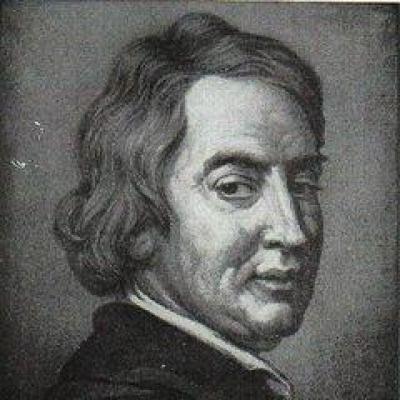
They say everything in the world is good for something.
Pity only on fresh objects stays, but with the tedious sight of woes decays.
Truth is never to be expected from authors whose understanding is warped with enthusiasm.
When I consider life, 'tis all a cheat; Yet, fooled with hope, men favour the deceit; Trust on, and think tomorrow will repay. Tomorrow's falser than the former day.
Ill habits gather unseen degrees, as brooks make rivers, rivers run to seas.
Love is a passion Which kindles honor into noble acts.
I am as free as nature first made man, Ere the base laws of servitude began, When wild in woods the noble savage ran.
None, none descends into himself, to find The secret imperfections of his mind: But every one is eagle-ey'd to see Another's faults, and his deformity.
Self-defense is Nature's eldest law.
The conscience of a people is their power.
And love's the noblest frailty of the mind.
But love's a malady without a cure.
None would live past years again, Yet all hope pleasure in what yet remain; And, from the dregs of life, think to receive, What the first sprightly running could not give.
Dreams are but interludes that fancy makes... Sometimes forgotten things, long cast behind Rush forward in the brain, and come to mind.
Nor is the people's judgment always true: the most may err as grossly as the few.
But Shakespeare's magic could not copied be; Within that circle none durst walk but he.
Death in itself is nothing; but we fear to be we know not what, we know not where.
Presence of mind and courage in distress, Are more than arrives to procure success?
Every age has a kind of universal genius, which inclines those that live in it to some particular studies.
The love of liberty with life is given, And life itself the inferior gift of Heaven.
Beware of the fury of the patient man.
Sure there's contagion in the tears of friends.
Love and Time with reverence use, Treat them like a parting friend: Nor the golden gifts refuse Which in youth sincere they send: For each year their price is more, And they less simple than before.
Be slow to resolve, but quick in performance.
I am devilishly afraid, that's certain; but ... I'll sing, that I may seem valiant.
Bold knaves thrive without one grain of sense, But good men starve for want of impudence.
Pains of love be sweeter far than all other pleasures are.
There's a proud modesty in merit; averse from asking, and resolved to pay ten times the gifts it asks.
Secret guilt is by silence revealed.
Every language is so full of its own proprieties that what is beautiful in one is often barbarous, nay, sometimes nonsense, in another.
Confidence is the feeling we have before knowing all the facts
For they can conquer who believe they can.
Those who write ill, and they who ne'er durst write, Turn critics out of mere revenge and spite.
The secret pleasure of a generous act Is the great mind's great bribe.
Let grace and goodness be the principal loadstone of thy affections. For love which hath ends, will have an end; whereas that which is founded on true virtue, will always continue.
Happy the man, and happy he alone, he who can call today his own; he who, secure within, can say, tomorrow do thy worst, for I have lived today.
For secrets are edged tools, And must be kept from children and from fools.
He look'd in years, yet in his years were seen A youthful vigor, and autumnal green.
When a man's life is under debate, The judge can ne'er too long deliberate.
Beware the fury of a patient man.
Many things impossible to thought have been by need to full perfection brought.
If passion rules, how weak does reason prove!
Only man clogs his happiness with care, destroying what is with thoughts of what may be.
Reason is a crutch for age, but youth is strong enough to walk alone.
Let grace and goodness be the principal loadstone of thy affections.
It is a madness to make fortune the mistress of events, because in herself she is nothing, can rule nothing, but is ruled by prudence.
He who would search for pearls must dive below.
Imagining is in itself the very height and life of poetry, which, by a kind of enthusiasm or extraordinary emotion of the soul, makes it seem to us that we behold those things which the poet paints.
Virtue in distress, and vice in triumph make atheists of mankind.
War is the trade of kings.
Love is love's reward.
Forgiveness to the injured does belong; but they ne'er pardon who have done wrong.
Welcome, thou kind deceiver! Thou best of thieves; who, with an easy key, Dost open life, and, unperceived by us, Even steal us from ourselves.
Nothing to build, and all things to destroy.
What passion cannot music raise and quell!
Love works a different way in different minds, the fool it enlightens and the wise it blinds.
More liberty begets desire of more; The hunger still increases with the store
Take not away the life you cannot give: For all things have an equal right to live.
A woman's counsel brought us first to woe, And made her man his paradise forego, Where at heart's ease he liv'd; and might have been As free from sorrow as he was from sin.
If thou dost still retain the same ill habits, the same follies, too, still thou art bound to vice, and still a slave.
We must beat the iron while it is hot, but we may polish it at leisure.
I'm a little wounded, but I am not slain; I will lay me down to bleed a while. Then I'll rise and fight again.
Love reckons hours for months, and days for years; and every little absence is an age.
No government has ever been, or can ever be, wherein time-servers and blockheads will not be uppermost.
Desire of power, on earth a vicious weed, Yet, sprung from high, is of celestial seed: In God 'tisglory; and when men aspire, 'Tis but a spark too much of heavenly fire.
No king nor nation one moment can retard the appointed hour.
Affability, mildness, tenderness, and a word which I would fain bring back to its original signification of virtue,--I mean good-nature,--are of daily use; they are the bread of mankind and staff of life.
A good conscience is a port which is landlocked on every side, where no winds can possibly invade. There a man may not only see his own image, but that of his Maker, clearly reflected from the undisturbed waters.
Love is not in our choice but in our fate.
Few know the use of life before 'tis past.
When I consider life, it is all a cheat. Yet fooled with hope, people favor this deceit.
Old as I am, for ladies' love unfit, The power of beauty I remember yet.
'Tis a good thing to laugh at any rate; and if a straw can tickle a man, it is an instrument of happiness.
Be fair, or foul, or rain, or shine, The joys I have possessed, in spite of fate, are mine. Not heaven itself upon the past has power; But what has been, has been, and I have had my hour.
Great souls forgive not injuries till time has put their enemies within their power, that they may show forgiveness is their own.
None but the brave deserve the fair.
The glorious lamp of heaven, the radiant sun, Is Nature's eye.
I never saw any good that came of telling truth.
How blessed is he, who leads a country life, Unvex'd with anxious cares, and void of strife! Who studying peace, and shunning civil rage, Enjoy'd his youth, and now enjoys his age: All who deserve his love, he makes his own; And, to be lov'd himself, needs only to be known.
War seldom enters but where wealth allures.
Faith is to believe what you do not yet see: the reward for this faith is to see what you believe. Thus all below is strength, and all above is grace.
By education most have been misled.
We first make our habits, and then our habits make us.
Desire of greatness is a godlike sin.
The sooner you treat your son as a man, the sooner he will be one.
I am resolved to grow fat and look young till forty, and then slip out of the world with the first wrinkle and the reputation of five-and-twenty.
Riches cannot rescue from the grave, which claims alike the monarch and the slave.
Mighty things from small beginnings grow.
Courage from hearts and not from numbers grows.
For truth has such a face and such a mien, as to be loved needs only to be seen.
He who trusts secrets to a servant makes him his master
Silence in times of suffering is the best.
Words are but pictures of our thoughts.
An hour will come, with pleasure to relate Your sorrows past, as benefits of Fate.
The scum that rises upmost, when the nation boils.
Set all things in their own peculiar place, and know that order is the greatest grace.
He who would pry behind the scenes oft sees a counterfeit.
For Art may err, but Nature cannot miss.
For what can power give more than food and drink, To live at ease, and not be bound to think?
Dancing is the poetry of the foot.
Boldness is a mask for fear, however great.
Since every man who lives is born to die, And none can boast sincere felicity, With equal mind, what happens, let us bear, Nor joy nor grieve too much for things beyond our care. Like pilgrims to the' appointed place we tend; The world's an inn, and death the journey's end.
Better to hunt in fields, for health unbought, Than fee the doctor for a nauseous draught, The wise, for cure, on exercise depend; God never made his work for man to mend.
For all the happiness mankind can gain Is not in pleasure, but in rest from pain.
Trust reposed in noble natures obliges them the more.
He has not learned the first lesson of life who does not every day surmount a fear.
A narrow mind begets obstinacy; we do not easily believe what we cannot see.
Time and death shall depart and say in flying Love has found out a way to live, by dying.
Since a true knowledge of nature gives us pleasure, a lively imitation of it, either in poetry or painting, must produce a much greater; for both these arts are not only true imitations of nature, but of the best nature.
So softly death succeeded life in her, She did but dream of heaven, and she was there.
Old age creeps on us ere we think it nigh.
Kings fight for empires, madmen for applause.
Beauty, like ice, our footing does betray; Who can tread sure on the smooth, slippery way: Pleased with the surface, we glide swiftly on, And see the dangers that we cannot shun.
Seas are the fields of combat for the winds; but when they sweep along some flowery coast, their wings move mildly, and their rage is lost.
Our souls sit close and silently within, And their own web from their own entrails spin; And when eyes meet far off, our sense is such, That, spider-like, we feel the tenderest touch.
Light sufferings give us leisure to complain.
Reason to rule, mercy to forgive: The first is law, the last prerogative. Life is an adventure in forgiveness.
Errors like straws upon the surface flow, Who would search for pearls to be grateful for often must dive below.
By education most have been misled; So they believe, because they were bred. The priest continues where the nurse began, And thus the child imposes on the man.
Long pains, with use of bearing, are half eased.
Politicians neither love nor hate.
While I am compassed round With mirth, my soul lies hid in shades of grief, Whence, like the bird of night, with half-shut eyes, She peeps, and sickens at the sight of day.
Shame on the body for breaking down while the spirit perseveres.
Of all the tyrannies on human kind the worst is that which persecutes the mind.
A happy genius is the gift of nature.