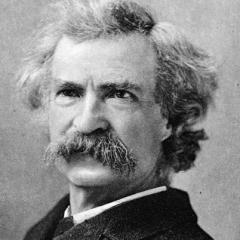
Howard zinn quotes
Explore a curated collection of Howard zinn's most famous quotes. Dive into timeless reflections that offer deep insights into life, love, and the human experience through his profound words.

I see this as the central issue of our time: how to find a substitute for war in human ingenuity, imagination, courage, sacrifice, patience... War is not inevitable, however persistent it is, however long a history it has in human affairs. It does not come out of some instinctive human need. It is manufactured by political leaders, who then must make a tremendous effort--by enticement, by propaganda, by coercion--to mobilize a normally reluctant population to go to war.
Let's face a historical truth: we have never had a "free market", we have always had government intervention in the economy, and indeed that intervention has been welcomed by the captains of finance and industry. They had no quarrel with "big government" when it served their needs.
We all have an enormous responsibility to bring to the attention of others information they do not have, which has the potential of causing them to rethink long-held ideas.
Voting is easy and marginally useful, but it is a poor substitute for democracy, which requires direct action by concerned citizens.
Whenever I become discouraged (which is on alternate Tuesdays, between three and four) I lift my spirits by remembering: The artists are on our side! I mean those poets and painters, singers and musicians, novelists and playwrights who speak to the world in a way that is impervious to assault because they wage the battle for justice in a sphere which is unreachable by the dullness of ordinary political discourse.
Americans have been taught that their nation is civilized and humane. But, too often, U.S. actions have been uncivilized and inhumane.
George Orwell said, "Whoever controls the past controls the future," by which he meant that history is incredibly important in shaping the world view of the next generation of people.
When you fight a war against a tyrant, who do you kill? You kill the victims of the tyrant.
When a social movement adopts the compromises of legislators, it has forgotten its role, which is to push and challenge the politicians, not fall in meekly behind them. We who protest...are not politicians. We are citizens. Whatever politicians may do, let them first feel the full force of citizens who speak for what is right, not for what is winnable, in a shamefully timorous Congress.
Civil disobedience is not our problem. Our problem is civil obedience.
Most wars, after all, present themselves as humanitarian endeavors to help people.
I am convinced that imprisonment is a way of pretending to solve the problem of crime. It does nothing for the victims of crime, but perpetuates the idea of retribution, thus maintaining the endless cycle of violence in our culture. It is a cruel and useless substitute for the elimination of those conditions--poverty, unemployment, homelessness, desperation, racism, greed--which are at the root of most punished crime. The crimes of the rich and powerful go mostly unpunished.
And in such a world of conflict, a world of victims and executioners, it is the job of thinking people, as Albert Camus suggested, not to be on the side of the executioners.
Education can, and should be, dangerous.
If we have learned anything in the past ten years, it is that these lovely things about America were never lovely. We have been expansionist and aggressive and mean to other people from the beginning. And we've been aggressive and mean to people in this country, and we've allocated the wealth of this country in a very unjust way. We've never had justice in our courts for the poor people, for black people, for radicals. Now how can we boast that America is a very special place? It's not that special. It really isn't.
Richard Nixon was not the lesser evil, he was the greater evil, but in his administration the war was finally brought to an end, because he had to deal with the power of the anti-war movement as well as the power of the Vietnamese movement. I will vote, but always with a caution that voting is not crucial, and organizing is the important thing.
We don't have to engage in grand, heroic actions to participate in the process of change. Small acts, when multiplied by millions of people, can transform the world.
Pessimism becomes a self-fulfilling prophecy; it reproduces itself by crippling our willingness to act.
If patriotism were defined, not as blind obedience to government, not as submissive worship to flags and anthems, but rather as love of one's country, one's fellow citizens (all over the world), as loyalty to the principles of justice and democracy, then patriotism would require us to disobey our government, when it violated those principles.
The strike, the boycott, the refusal to serve, the ability to paralyze the functioning of a complex social structure-these remain potent weapons against the most fearsome state or corporate power.
Control in modern times requires more than force, more than law. It requires that a population dangerously concentrated in cities and factorites, whose lives are filled qith cause for rebellion, be taught that all is right as it is. And so, the schools, the churches, the popular literature taught that to be rich was a sign of superiority, to be poor a sign of personal failure, and that the only way upward for a poor person was to climb into the ranks of the rich by extraordinary effort and extraordinary luck.
To ward off alienation and gloom, it is only necessary to remember the unremembered heroes of the past, and to look around us for the unnoticed heroes of the present.
When the Democrats are attacked for [inciting class warfare] they shrink back. They don't say what obviously should be said, "Yes, there is class warfare. There has always been class warfare in this country." The reason the Democrats shrink back is because the Democrats and the Republicans are on the same side of the class war. They have slightly different takes. The Democrats are part of the upper class that is more willing to make concessions to the lower class in order to maintain their power.
Majorities can be wrong, majorities can overrule rights of minorities. If majorities ruled, we could still have slavery. 80% of the population once enslaved 20% of the population. While run by majority rule that is ok. That is very flawed notion of what democracy is. Democracy has to take into account several things - proportionate requirements of people, not just needs of the majority, but also needs of the minority. Majority, especially in societies where the media manipulates public opinion, can be totally wrong and evil. People have to act according to conscience and not by majority vote.
Democracy depends on citizens being informed, and since our media, especially television (which is the most important source of news for most Americans) reports mostly what the people in power do, and repeats what the people in power say, the public is badly informed, and it means we cannot really say we have a functioning democracy.
People should go where they are not supposed to go, say what they are not supposed to say, and stay when they are told to leave.
In the United States today, the Declaration of Independence hangs on schoolroom walls, but foreign policy follows Machiavelli.
Historically, the most terrible things - war, genocide, and slavery - have resulted not from disobedience, but from obedience.
It's not right to respond to terrorism by terrorizing other people. And furthermore, it's not going to help. Then you might say, "Yes, it's terrorizing people, but it's worth doing because it will end terrorism." But how much common sense does it take to know that you cannot end terrorism by indiscriminately dropping bombs?
Capitalism has always been a failure for the lower classes. It is now beginning to fail for the middle classes.
Are terrorists going to be deterred - are terrorists going to be scared if we react violently? No. They love it. That's what they dote on. They dote on violence. They dote on having more reasons to commit more terrorism.
When [Ralph Waldo] Emerson visited Thoreau in jail and asked, 'What are you doing in there?' it was reported that Thoreau replied, 'What are you doing out there?'
Terrorism and war have something in common. They both involve the killing of innocent people to achieve what the killers believe is a good end.
War is terrorism, magnified a hundred times.
The Roman Empire came to an end, but the Roman people didn't come to an end, so I see the American Empire coming to an end just as other empires have come to an end.
When we organize with one another, when we get involved, when we stand up and speak out together, we can create a power no government can suppress.
The power of a bold idea uttered publicly in defiance of dominant opinion cannot be easily measured. Those special people who speak out in such a way as to shake up not only the self-assurance of their enemies, but the complacency of their friends, are precious catalysts for change.
They were not mentioned in the Declaration of Independence, they were absent in the Constitution and they were invisible in the new political democracy. They were the women of early America.
I can UNDERSTAND pessimism, but I don't BELIEVE in it. It's not simply a matter of faith, but of historical EVIDENCE. Not overwhelming evidence, just enough to give HOPE, because for hope we don't need certainty, only POSSIBILITY.
I am supposing, or perhaps only hoping, that our future may be found in the past's fugitive moments of compassion rather than in its solid centuries of warfare.
What most of us must be involved in--whether we teach or write, make films, write films, direct films, play music, act, whatever we do--has to not only make people feel good and inspired and at one with other people around them, but also has to educate a new generation to do this very modest thing: change the world.
The challenge remains. On the other side are formidable forces: money, political power, the major media. On our side are the people of the world and a power greater than money or weapons: the truth.
The pretense in disputed elections is that the great conflict is between the two major parties. The reality is that there is a much bigger conflict that the two parties jointly wage against large numbers of Americans who are represented by neither party and against powerless millions around the world." (p. 65)
The rule of law does not do away with the unequal distribution of wealth and power, but reinforces that inequality with the authority of law. It allocates wealth and poverty in such calculated and indirect ways as to leave the victim bewildered.
I came to the conclusion that war was an unacceptable way of solving whatever problems there were in the world--that there would be problems of tyranny, of injustice, of nations crossing frontiers and that injustice and tyranny should not be tolerated and should be fought and resisted, but the one thing that must not be used to solve that problem is war. Because war is inevitably the indiscriminate killing of large numbers of people. And that fact overwhelms whatever moral cause is somewhere buried in the history of that war.
I am not an absolute pacifist, because I can't rule out the possibility that under some, carefully defined circumstances, some degree of violence may be justified, if it is focused directly at a great evil.
Because of the control of the media by corporate wealth, the discovery of truth depends on an alternative media, such as small radio stations, networks, programs. Also, alternative newspapers, which exist all over the country. Also, cable TV programs, which are not dependent on commercial advertising. Also, the internet, which can reach millions of people by-passing the conventional media.
What is called “apathy” is, I believe, a feeling of helplessness on the part of the ordinary citizen, a feeling of impotence in the face of enormous power. It’s not that people are apathetic; they do care about what is going on, but don’t know what to do about it, so they do nothing, and appear to be indifferent.
You can't be neutral on a moving train.
The cry of the poor is is not always just, but if you don't listen to it, you will never know what justice is.
People who have no respect for human life or for freedom or justice have taken over this beautiful country of ours. It will be up to the American people to take it back.
War is terrorism ... Terrorism is the willingness to kill large numbers of people for some presumably good cause. That's what terrorists are about.
When the United States fought in Vietnam, it was organized modern technology versus organized human beings, and the human beings won.
The Constitution. . . illustrates the complexity of the American system: that it serves the interests of a wealthy elite, but also does enough for small property owners, for middle-income mechanics and farmers, to build a broad base of support. The slightly prosperous people who make up this base of support are buffers against the blacks, the Indians, the very poor whites. They enable the elite to keep control with a minimum of coercion, a maximum of law--all made palatable by the fanfare of patriotism and unity.
To be hopeful in bad times is based on the fact that human history is not only of cruelty, but also of compassion, sacrifice, courage, kindness. If we see only the worst, it destroys our capacity to do something. If we remember those times and places where people have behaved magnificently, this gives us the energy to act. And if we do act, in however small a way, we don't have to wait for some grand Utopian future. The future is an infinite succession of presents, and to live now as we think human beings should live, in defiance of all that is bad around us, is itself a marvelous victory.
Education becomes most rich and alive when it confronts the reality of moral conflict in the world.
It's a strange thing, we think that law brings order. Law doesn't. How do we know that law does not bring order? Look around us. We live under the rule of law. Notice how much order we have?
Yes, we're dreamers. We want it all. We want a peaceful world. We want an egalitarian world. We don't want war. We don't want capitalism. We want a decent society.
Imperialism is the factor in American policy, not just since 1898, but in fact long before it when we were expanding across this continent and taking away Indian lands in order to enlarge the territory of the United States. We have been an imperial power and an expansionist power for a very long time.
Sometimes it's a short step from banning to burning.
Politics is pointless if it does nothing to enhance the beauty of our lives.
I would prefer to use a very inclusive definition of the working class. I'd like to include all of those people who are, if they're not exploited by an immediate employer over them, they're exploited by the system and therefore have a cause to want to change the system. Having a very inclusive definition of the working class creates a great opportunity for organizing people.
If those in charge of our society - politicians, corporate executives, and owners of press and television - can dominate our ideas, they will be secure in their power. They will not need soldiers patrolling the streets. We will control ourselves.
In the long run, the oppressor is also a victim. In the short run (and so far, human history has consisted only of short runs), the victims, themselves desperate and tainted with the culture that oppresses them, turn on other victims.
I did not know much history when I became a bombardier in the U.S. Air Force in World War II. Only after the War did I see that we, like the Nazis, had committed atrocities... Hiroshima, Nagasaki, Dresden, my own bombing missions. And when I studied history after the War, I learned from reading on my own, not from my university classes, about the history of U.S. expansion and imperialism.
Nations are not communities and never have been. The history of any country, presented as the history of a family, conceals the fierce conflicts of interest (sometimes exploding, often repressed) between conquerors and conquered, masters and slaves, capitalists and workers, dominators and dominated in race and sex. And in such as world of conflict, a world of victims and executioners, it is the job of thinking people, as Albert Camus suggested, not to be on the side of the executioners.
How can you have a war on terrorism when war itself is terrorism?
Very important thing to keep in mind, that when justice comes and when injustices are remedied, they’re not remedied by the initiative of the national government or the politicians. They only respond to the power of social movements.
One percent of the nation owns a third of the wealth. The rest of the wealth is distributed in such a way as to turn those in the 99 percent against one another: small property owners against the propertyless, black against white, native-born against foreign-born, intellectuals and professionals against the uneducated and the unskilled. These groups have resented one another and warred against one another with such vehemence and violence as to obscure their common position as sharers of leftovers in a very wealthy country.
Behind the deceptive words designed to entice people into supporting violence -- words like democracy, freedom, self-defense, national security -- there is the reality of enormous wealth in the hands of a few, while billions of people in the world are hungry, sick, homeless.
Since war itself is the most extreme form of terrorism, a war on terrorism is profoundly self-contradictory.
The establishment, whatever rewards it gives us, will also, if necessary to maintain it's control, kill us
History is important. If you don't know history it is as if you were born yesterday. And if you were born yesterday, anybody up there in a position of power can tell you anything, and you have no way of checking up on it.
We need to decide that we will not go to war, whatever reason is conjured up by the politicians or the media, because war in our time is always indiscriminate, a war against innocents, a war against children.
There is a power that can be created out of pent-up indignation, courage, and the inspiration of a common cause, and that if enough people put their minds and bodies into that cause, they can win. It is a phenomenon recorded again and against in the history of popular movements against injustice all over the world.
The future is an infinite succession of presents.
The term anarchism has become associated with two phenomena with which real anarchist don't want to associate themselves with. One is violence, and the other is disorder or chaos. The popular conception of anarchism is on the one hand bomb-throwing and terrorism, and on the other hand no rules, no regulations, no discipline, everybody does what they want, confusion, etc. That is why there is a reluctance to use the term anarchism.
There is no act too small, no act too bold. The history of social change is the history of millions of actions, small and large, coming together at critical points to create a power that governments cannot suppress.
We were not born critical of existing society. There was a moment in our lives (or a month, or a year) when certain facts appeared before us, startled us, and then caused us to question beliefs that were strongly fixed in our consciousness-embedded there by years of family prejudices, orthodox schooling, imbibing of newspapers, radio, and television. This would seem to lead to a simple conclusion: that we all have an enormous responsibility to bring to the attention of others information they do not have, which has the potential of causing them to rethink long-held ideas.
The only way things will happen is if people get over the notion that they must see immediate success. If they get over that notion and persist, then they will see things happen before they even realize it.
Dissent is the highest form of patriotism.
History is instructive. And what it suggests to people is that even if they do little things, if they walk on the picket line, if they join a vigil, if they write a letter to their local newspaper. Anything they do, however small, becomes part of a much, much larger sort of flow of energy. And when enough people do enough things, however small they are, then change takes place.
What matters most is not who is sitting in the White House, but "who is sitting in" - and who is marching outside the White House, pushing for change.
It had long been true, and prisoners knew this better than anyone, that the poorer you were the more likely you were to end up in jail. This was not just because the poor committed more crimes. In fact, they did. The rich did not have to commit crimes to get what they wanted; the laws were on their side. But when the rich did commit crimes, they often were not prosecuted, and if they were they could get out on bail, hire clever lawyers, get better treatment from judges. Somehow, the jails ended up full of poor black people.
Small acts, when multiplied by millions of people, can transform the world.
History can come in handy. If you were born yesterday, with no knowledge of the past, you might easily accept whatever the government tells you. But knowing a bit of history--while it would not absolutely prove the government was lying in a given instance--might make you skeptical, lead you to ask questions, make it more likely that you would find out the truth.
There is the past and its continuing horrors: violence, war, prejudices against those who are different, outrageous monopolization of the good earth's wealth by a few, political power in the hands of liars and murderers, the building of prisons instead of schools, the poisoning of the press and the entire culture by money. It is easy to become discouraged observing this, especially since this is what the press and television insist that we look at, and nothing more.
When some people ask me about voting, they would say will you support this candidate or that candidate? I say: "I will support this candidate for one minute that I am in the voting booth. At that moment I will support A versus B, but before I am going to the voting booth, and after I leave the voting booth, I am going to concentrate on organizing people and not organizing electoral campaign."
Civil disobedience is not something outside the realm of democracy. Democracy requires civil disobedience. Without civil disobedience democracy does not exist.
I think people are dazzled by Obama's rhetoric, and that people ought to begin to understand that Obama is going to be a mediocre president — which means, in our time, a dangerous president — unless there is some national movement to push him in a better direction.
Is not nationalism - that devotion to a flag, an anthem, a boundary so fierce it engenders mass murder - one of the great evils of our time, along with racism, along with religious hatred? These ways of thinking - cultivated, nurtured, indoctrinated from childhood on - have been useful to those in power, and deadly for those out of power.
War is by definition the indiscriminate killing of huge numbers of people for ends that are uncertain. Think about means and ends, and apply it to war. The means are horrible, certainly. The ends, uncertain. That alone should make you hesitate. . . . We are smart in so many ways. Surely, we should be able to understand that in between war and passivity, there are a thousand possibilities.
But I suppose the most revolutionary act one can engage in is... to tell the truth.
I wonder how the foreign policies of the United States would look if we wiped out the national boundaries of the world, at least in our minds, and thought of all children everywhere as our own.
Civil disobedience is not our problem. Our problem is civil obedience. Our problem is that people all over the world have obeyed the dictates of leaders…and millions have been killed because of this obedience…Our problem is that people are obedient allover the world in the face of poverty and starvation and stupidity, and war, and cruelty. Our problem is that people are obedient while the jails are full of petty thieves… (and) the grand thieves are running the country. That’s our problem.
If there is going to be change, real change, it will have to work its way from the bottom up, from the people themselves. That's how change happens.
The function of traditional history is to create a citizenry that looks to the top - the president, Congress, the Supreme Court - to make the important decisions. That's what traditional history is all about: the laws that were passed, the decisions made by the court. So much of history is built around "the great men." All of that is very anti-democratic.
Terrorism has replaced Communism as the rationale for the militarization of the country [America], for military adventures abroad, and for the suppression of civil liberties at home. It serves the same purpose, serving to create hysteria.
But remember, this power of the people on top depends on the obedience of the people below. When people stop obeying, they have no power.
One certain effect of war is to diminish freedom of expression. Patriotism becomes the order of the day, and those who question the war are seen as traitors, to be silenced and imprisoned.
When I say history is a matter of life and death, I mean this: If you really don't know history, you are a victim of whatever the authorities tell you. You have no way of checking up on them. You have no way of deciding whether there is any truth in what they are saying.
Scholars, who pride themselves on speaking their minds, often engage in a form of self-censorship which is called "realism." To be "realistic" in dealing with a problem is to work only among the alternatives which the most powerful in society put forth. It is as if we are all confined to a, b, c, or d in the multiple choice test, when we know there is another possible answer. American society, although it has more freedom of expression than most societies in the world, thus sets limits beyond which respectable people are not supposed to think or speak.
Indeed, it is impossible to be neutral. In a world already moving in certain directions, where wealth and power are already distributed in certain ways, neutrality means accepting the way things are now. It is a world of clashing interests war against peace, nationalism against internationalism, equality against greed, and democracy against elitism and it seems to me both impossible and undesirable to be neutral in those conflicts.
We need to assert our allegiance to the human race, and not to any one nation.
For most Black people there is still poverty and desperation. The Ghettos still exist, and the proportion of Blacks in prison is still much greater than Whites. Today, there is less overt racism, but the economic injustices create an "institutional racism" which exists even while more Blacks are in high places, such as Condoleeza Rice in Bush's Administration and Obama running for President.
The violence of our time is caused by obedience.
If the gods had intended for people to vote, they would have given us candidates.
The struggle for justice should never be abandoned because of the apparent overwhelming power of those who seem invincible in their determination to hold on to it. That apparent power has, again and again, proved vulnerable to human qualities less measurable than bombs and dollars: moral fervor, determination, unity, organization, sacrifice, wit, ingenuity, courage, patience.
We need to organize ourselves and protest against existing order - against war, against economic and sexual exploitation, against racism, etc. But to organize ourselves in such a way that means correspond to the ends, and to organize ourselves in such a way as to create kind of human relationship that should exist in future society. That would mean to organize ourselves without centralize authority, without charismatic leader, in a way that represents in miniature the ideal of the future egalitarian society.
What we have is a more sophisticated form of imperialism, which is economic. But lurking in the background, always ready to go, is an armed force.
Sometimes the difference between two candidates is an important one in the immediate sense, and then I believe trying to get somebody into office, who is a little better, who is less dangerous, is understandable. But never forgetting that no matter who gets into office, the crucial question is not who is in office, but what kind of social movement do you have. Because if you have a powerful social movement, it doesn't matter who is in office.
The problem in this world is not civil disobedience...th e problem in this world is civil obedience.
To be hopeful in bad times is not just foolishly romantic. It is based on the fact that human history is a history not only of cruelty but also of compassion, sacrifice, courage, kindness.
Human beings, whatever their backgrounds, are more open than we think, that their behavior cannot be confidently predicted from their past, that we are all creatures vulnerable to new thoughts, new attitudes. And while such vulnerability creates all sorts of possibilities, both good and bad, its very existence is exciting. It means that no human being should be written off, no change in thinking deemed impossible.
We've never had our injustices rectified from the top, from the president or Congress, or the Supreme Court, no matter what we learned in junior high school about how we have three branches of government, and we have checks and balances, and what a lovely system. No. The changes, important changes that we've had in history, have not come from those three branches of government. They have reacted to social movements.
Memorial Day will be celebrated ... by the usual betrayal of the dead, by the hypocritical patriotism of the politicians and contractors preparing for more wars, more graves to receive more flowers on future Memorial Days. The memory of the dead deserves a different dedication. To peace, to defiance of governments.
Protest beyond the law is not a departure from democracy; it is absolutely essential to it.
If you want to end terrorism, you have to stop being terrorists
They have the guns, we have the poets. Therefore, we will win.
We are not hated because we practice democracy, value freedom, or uphold human rights. We are hated because our government denies these things to people in Third World countries whose resources are coveted by multinational corporations. That hatred we have sown has come back to haunt us in the form of terrorism....
There is no flag large enough to cover the shame of killing innocent people.
The fact that war belongs to the past, does not mean it has to be part of the future.
While some multimillionaires started in poverty, most did not. A study of the origins of 303 textile, railroad and steel executives of the 1870s showed that 90 percent came from middle- or upper-class families. The Horatio Alger stories of "rags to riches" were true for a few men, but mostly a myth, and a useful myth for control.
If you join a fight for social justice you may win or lose, but just by being part of the struggle, you win, and your life will be better for it.
Democracy depends on people speaking out, and in times of great crisis, on people creating a commotion.