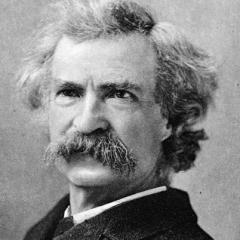
Edward gibbon quotes
Explore a curated collection of Edward gibbon's most famous quotes. Dive into timeless reflections that offer deep insights into life, love, and the human experience through his profound words.

The principles of a free constitution are irrecoverably lost, when the legislative power is nominated by the executive.
As long as mankind shall continue to bestow more liberal applause on their destroyers than on their benefactors, the thirst of military glory will ever be the vice of the most exalted characters.
Conversation enriches the understanding, but solitude is the school of genius.
The theologian may indulge the pleasing task of describing Religion as she descended from Heaven, arrayed in her native purity. A more melancholy duty is imposed on the historian. He must discover the inevitable mixture of error and corruption which she contracted in a long residence upon Earth, among a weak and degenerate race of beings.
A heart to resolve, a head to contrive, and a hand to execute.
It was the fashion of the times to attribute every remarkable event to the particular will of the Deity; the alterations of nature were connected, by an invisible chain, with the moral and metaphysical opinions of the human mind; and the most sagacious divines could distinguish, according to the colour of their respective prejudices, that the establishment of heresy tended to produce an earthquake, or that a deluge was the inevitable consequence of the progress of sin and error.
In the second century of the Christian era, the empire of Rome comprehended the fairest part of the earth, and the most civilized portion of mankind.
In discussing Barbarism and Christianity I have actually been discussing the Fall of Rome.
Julian sincerely abhorred the system of oriental despotism which Diocletian, Constantine, and the patient habits of four score years, had established in the empire. A motive of superstition prevented the execution of the design which Julian had frequently meditated, of relieving his head from the weight of a costly diadem; but he absolutely refused the title of Dominus or Lord, a word which was grown so familiar to the ears of the Romans, that they no longer remembered its servile and humiliating origin.
Europe is secure from any future irruptions of Barbarians; since, before they can conquer, they must cease to be barbarous.
But the wisdom and authority of the legislator are seldom victorious in a contest with the vigilant dexterity of private interest.
Such was the unhappy condition of the Roman emperors, that, whatever might be their conduct, their fate was commonly the same. A life of pleasure or virtue, of severity or mildness, of indolence or glory, alike led to an untimely grave; and almost every reign is closed by the same disgusting repetition of treason and murder.
If a man were called to fix the period in the history of the world during which the condition of the human race was most happy and prosperous, he would, without hesitation, name that which elapsed from the death of Domitian to the accession of Commodus.
Among the innumerable monuments of architecture constructed by the Romans, how many have escaped the notice of history, how few have resisted the ravages of time and barbarism! And yet even the majestic ruins that are still scattered over Italy and the provinces, would be sufficient to prove that those countries were once the seat of a polite and powerful empire.
Corruption, the most infallible symptom of constitutional liberty.
The Roman government appeared every day less formidable to its enemies, more odious and oppressive to its subjects.
The incapacity of a weak and distracted government may often assume the appearance and produce the effects of a treasonable correspondence with the public enemy. If Alaric himself had been introduced into the council of Ravenna, he would probably have advised the same measures which were actually pursued by the ministers of Honorius.
The Germans, in the age of Tacitus, were unacquainted with the use of letters; and the use of letters is the principal circumstance that distinguishes a civilised people from a herd of savages incapable of knowledge or reflection. Without that artificial help, the human memory soon dissipates or corrupts the ideas intrusted to her charge; and the nobler faculties of the mind, no longer supplied with models or with materials, gradually forget their powers; the judgment becomes feeble and lethargic, the imagination languid or irregular.
The peace of the Eastern church was invaded by a swarm of fanatics [monks], incapable of fear, or reason, or humanity; and the Imperial troops acknowledged, without shame, that they were much less apprehensive of an encounter with the fiercest Barbarians.
The possession and the enjoyment of property are the pledges which bind a civilised people to an improved country.
A state of skepticism and suspense may amuse a few inquisitive minds. But the practice of superstition is so congenial to the multitude that, if they are forcibly awakened, they still regret the loss of their pleasing vision.
[Every age], however destitute of science or virtue, sufficiently abounds with acts of blood and military renown.
The science of the church is neglected for the study of geometry, and they lose sight of Heaven while they are employed in measuring the earth. Euclid is perpetually in their hands. Aristotle and Theophrastus are the objects of their admiration; and they express an uncommon reverence for the works of Galen. Their errors are derived from the abuse of the arts and sciences of the infidels, and they corrupt the simplicity of the gospel by the refinements of human reason.
Many a sober Christian would rather admit that a wafer is God than that God is a cruel and capricious tyrant.
bizarreness masqueraded as creativity.
Agriculture is the foundation of manufactures; since the productions of nature are the materials of art. Under the Roman empire, the labour of an industrious and ingenious people was variously, but incessantly employed, in the service of the rich. In their dress, their table, their houses, and their furniture, the favourites of fortune united every refinement of conveniency, of elegance, and of splendour, whatever could soothe their pride or gratify their sensuality.
The imprudent Maximus disregarded these salutary considerations: he gratified his resentment and ambition; he saw the bleeding corpse of Valentinian at his feet; and he heard himself saluted Emperor by the unanimous voice of the senate and people. But the day of his inauguration was the last day of his happiness.
[Peace] cannot be honorable or secure, if the sovereign betrays a pusillanimous aversion to war.
But in almost every province of the Roman world, an army of fanatics, without authority and without discipline, invaded the peaceful inhabitants; and the ruin of the fairest structures of antiquity still displays the ravages of those barbarians who alone had time and inclination to execute such laborious destruction.
In the end, more than freedom, they wanted security. They wanted a comfortable life, and they lost it all – security, comfort, and freedom. When the Athenians finally wanted not to give to society but for society to give to them, when the freedom they wished for most was freedom from responsibility, then Athens ceased to be free and was never free again.
I have somewhere heard or read the frank confession of a Benedictine abbot: "My vow of poverty has given me a hundred thousand crowns a year; my vow of obedience has raised me to the rank of a sovereign prince." - I forget the consequences of his vow of chastity.
The awful mysteries of the Christian faith and worship were concealed from the eyes of strangers, and even of catechumens, with an affected secrecy, which served to excite their wonder and curiosity.
That public virtue which among the ancients was denominated patriotism, is derived from a strong sense of our own interest in the preservation and prosperity of the free government of which we are members. Such a sentiment, which had rendered the legions of the republic almost invincible, could make but a very feeble impression on the mercenary servants of a despotic prince; and it became necessary to supply that defect by other motives, of a different, but not less forcible nature; honour and religion.
Language is the leading principle which unites or separates the tribes of mankind.
The decline of Rome was the natural and inevitable effect of immoderate greatness. Prosperity ripened the principle of decay; the cause of the destruction multiplied with the extent of conquest; and, as soon as time or accident and removed the artificial supports, the stupendous fabric yielded to the pressure of its own weight. The story of the ruin is simple and obvious: and instead of inquiring why the Roman Empire was destroyed we should rather be surprised that it has subsisted for so long.
Every person has two educations, one which he receives from others, and one, more important, which he gives to himself.
I was never less alone than when by myself.
According to the law of custom, and perhaps of reason, foreign travel completes the education of an English gentleman.
The elegance of dress, of motion, and of manners gives a lustre to beauty, and inflames the senses through the imagination. Luxurious entertainments, midnight dances, and licentious spectacles, present at once temptation and opportunity to female frailty. From such dangers the unpolished wives of the barbarians were secured by poverty, solitude, and the painful cares of a domestic life.
The manly pride of the Romans, content with substantial power, had left to the vanity of the East the forms and ceremonies of ostentatious greatness. But when they lost even the semblance of those virtues which were derived from their ancient freedom, the simplicity of Roman manners was insensibly corrupted by the stately affectation of the courts of Asia.
At that time the archiepiscopal throne of Alexandria was filled by Theophilus, the perpetual enemy of peace and virtue; a bold, bad man, whose hands were alternately polluted with gold and with blood.
Whenever the offence inspires less horror than the punishment, the rigour of penal law is obliged to give way to the common feelings of mankind.
To a lover of books the shops and sales in London present irresistible temptations.
The Romans, who so coolly and so concisely mention the acts of justice which were exercised by the legions, reserve their compassion and their eloquence for their own sufferings, when the provinces were invaded and desolated by the arms of the successful Barbarians.
Suspicious princes often promote the last of mankind, from a vain persuasion that those who have no dependence except on their favor will have no attachment except to the person of their benefactor.
Style is the image of character.
Our ignorance is God; what we know is science.
Imam Hussain's sacrifice is for all groups and communities, an example of the path of rightousness.
I never make the mistake of arguing with people for whose opinions I have no respect.
Their poverty secured their freedom, since our desires and our possessions are the strongest fetters of despotism.
But [the Arabs'] friendship was venal, their faith inconstant, their enmity capricious: it was an easier task to excite than to disarm these roving barbarians; and, in the familiar intercourse of war, they learned to see, and to despise, the splendid weakness both of Rome and of Persia.
It is incumbent on us diligently to remember that the kingdom of heaven was promised to the poor in spirit, and that minds afflicted by calamity and the contempt of mankind cheerfully listen to the divine promise of future happiness; while, on the contrary, the fortunate are satisfied with the possession of this world; and the wise abuse in doubt and dispute their vain superiority of reason and knowledge.
Under a democratical government the citizens exercise the powers of sovereignty; and those powers will be first abused, and afterwards lost, if they are committed to an unwieldy multitude.
Every man who rises above the common level has received two educations: the first from his teachers; the second, more personal and important, from himself.
There exists in human nature a strong propensity to depreciate the advantages, and to magnify the evils, of the present times.
Unprovided with original learning, unformed in the habits of thinking, unskilled in the arts of composition, I resolved to write a book.
History is indeed little more than the register of the crimes, follies, and misfortunes of mankind.
[It] is the interest as well as duty of a sovereign to maintain the authority of the laws.
So long as mankind shall continue to lavish more praise upon its destroyers than upon its benefactors war shall remain the chief pursuit of ambitious minds.
It is the common calamity of old age to lose whatever might have rendered it desirable.
The various modes of worship which prevailed in the Roman world were all considered by the people as equally true; by the philosopher as equally false; and by the magistrate as equally useful.
In the most rigorous [Roman] laws, a wife was condemned to support a gamester, a drunkard, or a libertine, unless he were guilty of homicide, poison, or sacrilege, in which cases the marriage, as it should seem, might have been dissolved by the hand of the executioner.
The philosopher, who with calm suspicion examines the dreams and omens, the miracles and prodigies, of profane or even of ecclesiastical history, will probably conclude that, if the eyes of the spectators have sometimes been deceived by fraud, the understanding of the readers has much more frequently been insulted by fiction.
The style of an author should be the image of his mind, but the choice and command of language is the fruit of exercise.
The single combats of the heroes of history or fable amuse our fancy and engage our affections: the skillful evolutions of war may inform the mind, and improve a necessary, though pernicious, science. But in the uniform and odious pictures of a general assault, all is blood, and horror, and confusion . . .
And thus toleration produced not only mutual indulgence, but even religious concord. The superstition of the people was not embittered theological rancor.
The savage nations of the globe are the common enemies of civilized society; and we may inquire, with anxious curiosity, whether Europe is still threatened with a repetition of those calamities, which formerly oppressed the arms and institutions of Rome.
The first and indispensable requisite of happiness is a clear conscience.
An extensive empire must be supported by a refined system of policy and oppression; in the centre, an absolute power, prompt in action and rich in resources; a swift and easy communication with the extreme parts; fortifications to check the first effort of rebellion; a regular administration to protect and punish; and a well-disciplined army to inspire fear, without provoking discontent and despair.
A nation ignorant of the equal benefits of liberty and law, must be awed by the flashes of arbitrary power: the cruelty of a despot will assume the character of justice; his profusion, of liberality; his obstinacy, of firmness.
The love of spectacles was the taste, or rather passion, of the Syrians: the most skilful artists were procured form the adjacent cities; a considerable share of the revenue was devoted to the public amusements; and the magnificence of the games of the theatre and circus was considered as the happiness, and as the glory, of Antioch.
Hope, the best comfort of our imperfect condition.
A philosopher may deplore the eternal discords of the human race, but he will confess, that the desire of spoil is a more rational provocation than the vanity of conquest.
Since the primitive times, the wealth of the popes was exposed to envy, their powers to opposition, and their persons to violence.
In the second century of the Christian era, the Empire of Rome comprehended the fairest part of the earth, and the most civilised portion of mankind. The frontiers of that extensive monarchy were guarded by ancient renown and disciplined valour. The gentle but powerful influence of laws and manners had gradually cemented the union of the provinces. Their peaceful inhabitants enjoyed and abused the advantages of wealth and luxury.
The monastic studies have tended, for the most part, to darken, rather than to dispel, the cloud of superstition.
It was here that I suspended my religious inquiries (aged 17).
[The] discretion of the judge is the first engine of tyranny . . .
The sentiment of fear is nearly allied to that of hatred.
To an active mind, indolence is more painful than labor.
Ignorant of the arts of luxury, the primitive Romans had improved the science of government and war.
If the emperor had capriciously decreed the death of the most eminent and virtuous citizen of the republic, the cruel order would have been executed without hesitation by the ministers of open violence or of specious injustice. The caution, the delay, the difficulty with which he proceeded in the condemnation and punishment of a popular bishop, discovered to the world that the privileges of the church had already revived a sense of order and freedom in the Roman government.
In the field of controversy I always pity the moderate party, who stand on the open middle ground exposed to the fire of both sides.
The mathematics are distinguished by a particular privilege, that is, in the course of ages, they may always advance and can never recede.
Where error is irreparable, repentance is useless.
We improve ourselves by victories over ourselves. There must be contest, and we must win.
I have but one lamp by which my feet are guided, and that is the lamp of experience. I know no way of judging of the future but by the past.
The gravest of the ecclesiastical historians, Eusebius himself, indirectly confesses that he has related whatever might redound to the glory, and that he has suppressed all that could tend to the disgrace, of religion.
All that is human must retrograde if it does not advance.
The best and most important part of every man's education is that which he gives himself.
The chaste severity of the fathers in whatever related to the commerce of the two sexes flowed from the same principle -- their abhorrence of every enjoyment which might gratify the sensual and degrade the spiritual nature of man. It was their favourite opinion, that if Adam had preserved his obedience to the Creator, he would have lived for ever in a state of virgin purity, and that some harmless mode of vegetation might have peopled paradise with a race of innocent and immortal beings.
The difference of language, dress, and manners . . . severs and alienates the nations of the globe.
If we are more affected by the ruin of a palace than by the conflagration of a cottage, our humanity must have formed a very erroneous estimate of the miseries of human life.
Pleasure and guilt are synonymous terms in the language of the monks, and they discovered, by experience, that rigid fasts, and abstemious diet, are the most effectual preservatives against the impure desires of the flesh.
Women [in ancient Rome] were condemned to the perpetual tutelage of parents, husbands, or guardians; a sex created to please and obey was never supposed to have attained the age of reason and experience. Such, at least, was the stern and haughty spirit of the ancient law . . .
It was Rome, on the fifteenth of October, 1764, as I sat musing amidst the ruins of the Capitol, while the barefooted friars were singing vespers in the Temple of Jupiter, that the idea of writing the decline and fall of the city first started to my mind.
There is nothing perhaps more adverse to nature and reason than to hold in obedience remote countries and foreign nations, in opposition to their inclination and interest.
[Instead] of inquiring why the Roman empire was destroyed, we should rather be surprised that it had subsisted so long.
In the purer ages of the commonwealth, the use of arms was reserved for those ranks of citizens who had a country to love, a property to defend, and some share in enacting those laws which it was their interest, as well as duty, to maintain. But in proportion as the public freedom was lost in extent of conquest, war was gradually improved into an art, and degraded into a trade.
The first of earthly blessings, independence.
Let us read with method, and propose to ourselves an end to which our studies may point. The use of reading is to aid us in thinking.
Religion is a mere question of geography.
In the end, they wanted security more than they wanted freedom.
The primitive Christians perpetually trod on mystic ground, and their minds were exercised by the habits of believing the most extraordinary events
In the various states of society, armies are recruited from very different motives. Barbarians are urged by the love of war; the citizens of a free republic may be prompted by a principle of duty; the subjects, or at least the nobles, of a monarchy, are animated by a sentiment of honor; but the timid and luxurious inhabitants of a declining empire must be allured into the service by the hopes of profit, or compelled by the dread of punishment.
A nation of slaves is always prepared to applaud the clemency of their master who, in the abuse of absolute power, does not proceed to the last extremes of injustice and oppression.
Yet the arts of Severus cannot be justified by the most ample privileges of state reason. He promised only to betray; he flattered only to ruin; and however he might occasionally bind himself by oaths and treaties, his conscience, obsequious to his interest, always released him from the inconvenient obligation.
The communication of ideas requires a similitude of thought and language . . .
[The monks'] credulity debased and vitiated the faculties of the mind: they corrupted the evidence of history; and superstition gradually extinguished the hostile light of philosophy and science.
It is scarcely possible that the eyes of contemporaries should discover in the public felicity the latent causes of decay and corruption. This long peace, and the uniform government of the Romans, introduced a slow and secret poison into the vitals of the empire. The minds of men were gradually reduced to the same level, the fire of genius was extinguished, and even the military spirit evaporated.
The most worthless of mankind are not afraid to condemn in others the same disorders which they allow in themselves; and can readily discover some nice difference in age, character, or station, to justify the partial distinction.
I am indeed rich, since my income is superior to my expenses, and my expense is equal to my wishes.
'I believe in one God and Mohammed the Apostle of God,' is the simple and invariable profession of Islam. The intellectual image of the Deity has never been degraded by any visible idol; the honours of the prophet have never transgressed the measure of human virtue, and his living precepts have restrained the gratitude of his disciples within the bounds of reason and religion.
The science of the laws is the slow growth of time and experience.
[Whole] generations may be swept away by the madness of kings in the space of a single hour.
And the winds and the waves are always on the side of the ablest navigators.
Active valour may often be the present of nature; but such patient diligence can be the fruit only of habit and discipline.
My early and invincible love of reading I would not exchange for all the riches of India.
A bloody and complete victory has sometimes yielded no more than the possession of the field and the loss of ten thousand men has sometimes been sufficient to destroy, in a single day, the work of ages.
To the University of Oxford I acknowledge no obligation; and she will as cheerfully renounce me for a son, as I am willing to disclaim her for a mother. I spent fourteen months at Magdalen College: they proved the fourteen months the most idle and unprofitable of my whole life.
[Courage] arises in a great measure from the consciousness of strength . . .
Our work is the presentation of our capabilities.
Books are those faithful mirrors that reflect to our mind the minds of sages and heroes.
[The] operation of the wisest laws is imperfect and precarious. They seldom inspire virtue, they cannot always restrain vice.
The Gauls derided the hairy and gigantic savages of the North; their rustic manners, dissonant joy, voracious appetite, and their horrid appearance, equally disgusting to the sight and to the smell.