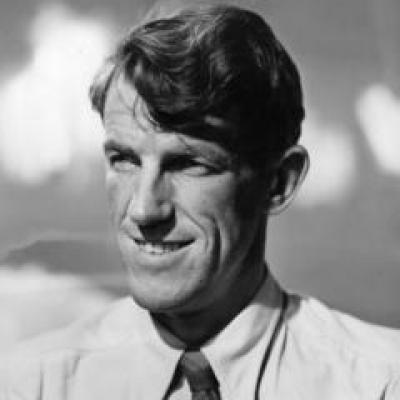
I would have said that during the early days of my life there was never a moment when I wasn't fit. We worked extremely hard on the beekeeping line, and both my brother and I used to compete, particularly when we were collecting honey. We would each have an 80-pound box of honey and we would race up the hill on the Tuakau track and race back down. We just raced all the time, and we used to keep very fit indeed.
Ever since the morning of May 29, 1953, when Tenzing Norgay and I became the first climbers to step onto the summit of Mount Everest, I've been called a great adventurer.
Adventuring can be for the ordinary person with ordinary qualities, such as I regard myself.
I'm a very, very modest person and with limited abilities. I do have the wish to succeed in anything I undertake, and that does help out, but, in general, there are so many other people who are skilled in their field that I feel very ordinary.
I've always hated the danger part of climbing, and it's great to come down again because it's safe.
I was not a beater of children and as a consequence I've always been, I think, very agreeable and co-operative.
People do not decide to become extraordinary. They decide to accomplish extraordinary things.
With practice and focus, you can extend yourself far more than you ever believed possible.
I've always hated the danger part of climbing, and it's great to come down again because it's safe But there is something about building up a comradeship - that I still believe is the greatest of all feats - and sharing in the dangers with your company of peers. It’s the intense effort, the giving of everything you’ve got. It’s really a very pleasant sensation.
I was definitely seriously affected [with wifw and daughter deaths], no question, but I learnt to devote myself to the things that we'd been doing for years and years and slowly the pain drifted away.
I don't know if I particularly want to be remembered for anything. I personally do not think I'm a great gift to the world. I've been very fortunate.
I've often thought about that and the only suitable member to join me on that climb [to Everest] was George Lowe: he was strong, a good man on a mountain, with a great sense of humour, and I liked that. I think George and I could've done that together ... I've probably never told George that.
Becoming a 'Sir' is slightly uncomfortable at first, although it is a considerable honor. It is amazing how quickly you become accustomed to it.
My mother was a schoolteacher and very keen that I go to a city school, so although it was fairly impoverished times, I traveled every day to the Auckland Grammar School.
Geography was not furthered by the achievement, scientific progress was scarcely hastened, and nothing new was discovered. Yet the names of Hillary and Tenzing went instantly into all languages as the names of heroes, partly because they really were men of heroic mold but chiefly because they represented so compellingly the spirit of their time.
Everest you won't change, but I will get better...I will conquer you.
George Lowe was the one who opened the mail, and George started laughing uproariously and I looked up at him in astonishment and said, "What's so funny?" And he said, "You've been given a title", and I said, "Ha, ha, big joke." I didn't believe him but, sure enough, in this letter it indicated that the Queen had given me a title.
I have the challenges sort of already there and as a consequence my companions feel a considerable desire to do this, too, and they feel very put out if they are left in the cold, so there we have it. We have me who has lots of ideas and then we have a very good team who wish - who are persuaded almost - to take part in these challenges.
While on top of Everest, I looked across the valley towards the great peak Makalu and mentally worked out a route about how it could be climbed. It showed me that even though I was standing on top of the world, it wasn't the end of everything. I was still looking beyond to other interesting challenges.
It's not the moutain we conquer but ourselves.
June [Hillary] is a very strong influence in my life and particularly now in my ancient years there is no doubt at all: if there's a decision to be made, quite often June is the one who makes it.
If the going is tough and the pressure is on, If the reserves of strength have been drained and the summit is still not in sight, then the quality to seek in the person is neither great strength nor quickness of hand, but rather a resolute mind firmly set on its purpose that refuses to let its body slack or rest.
I was certainly seriously emotionally affected [ when Louise Hillary and Belinda Hillary died], but we were building the hospital at the time and I decided that the only thing to do was to carry on and complete the hospital - and it was a jolly good hospital too, I might say. So I really did it by working and working on the things that Louise and I had been working on.
It was wrong if there was a man suffering altitude problems and was huddled under a rock, just to lift your hat, say 'good morning' and pass on by, he said. Human life is far more important than just getting to the top of a mountain.
I think that a good mountaineer is usually a sensible mountaineer.
Nobody climbs mountains for scientific reasons. Science is used to raise money for the expeditions, but you really climb for the hell of it.
I never talk about being leaders and all the rest of it. I can only remember one or two occasions in my life when I actually issued orders, and I felt thoroughly miserable after doing it.
The explorers of the past were great men and we should honour them. But let us not forget that their spirit lives on. It is still not hard to find a man who will adventure for the sake of a dream or one who will search, for the pleasure of searching, not for what he may find.
I don't spend a lot of time thinking about dying, but I like to think that I've - if it did occur - that I would die peacefully and not make too much of a fuss about it.
I have discovered that even the mediocre can have adventures and even the fearful can achieve.
June [Hillary] had been doing all these things - the Himalayas and all the rest of it - so we had done things together for a long time, and, particularly as far as our Sherpas were concerned, we had a very sound, I think, philosophy. So that made it very easy for us to agree on what should be done.
I had a very strong desire to carry out adventures, but in those early days I didn't actually do any. I just dreamt about it.
We shared a philosophy together [with June Hillary]. We believed very strongly in the welfare of helping other people, particularly the Third World people.
When you go to the mountains, you see them and you admire them. In a sense, they give you a challenge, and you try to express that challenge by climbing them.
I'm definitely a Queen supporter. She was great.
I think it all comes down to motivation. If you really want to do something, you will work hard for it.
There is precious little in civilization to appeal to a yeti.
I have been seriously afraid at times but have used my fear as a stimulating factor rather than allowing it to paralyse me. My abilities have not been outstanding, but I have had sufficient strength and determination to meet my challenges and have usually managed to succeed with them.
Good planning is important. I've also regarded a sense of humor as one of the most important things on a big expedition. When you're in a difficult or dangerous situation, or when you're depressed about the chances of success, someone who can make you laugh eases the tension.
When you're climbing at high altitudes, life can get pretty miserable.
Life's a bit like mountaineering - never look down.
I have no desire to live anywhere else but New Zealand. I've had the good fortune to travel widely around the world, but New Zealand is home - and I like to be here. I'm proud to be a New Zealander.
I was incredibly stubborn. I mean, I believe that my father was frequently in the right, but I would never admit it, and so we did have a few set-tos on various topics; but on the whole as I got older and my father got more mature we got along reasonably well.
In those days we were punished very frequently and I felt that it was often unjust, and so I would resist the desire to agree with many, many things. So I used to get beaten quite frequently and I more or less accepted it as part of life.
I always, I would say, make sure that in my presentation I'll have what I want to do. I try and make it so interesting to my companions that they want to go, too. I don't have to twist any arms or make - you know - any great challenges available.
I would like to be remembered for the schools and hospitals and bridges and all the other activities that we did with the Sherpas. Unquestionably, they are the things I feel that were the most worthwhile of everything I was involved in.
Some day I'm going to climb Everest.
Mount Everest, you beat me the first time, but I'll beat you the next time because you've grown all you are going to grow... but I'm still growing!
I'm sure the feeling of fear, as long as you can take advantage of it and not be rendered useless by it, can make you extend yourself beyond what you would regard as your capacity. If you're afraid, the blood seems to flow freely through the veins, and you really do feel a sense of stimulation.
Motivation is the single most important factor in any sort of success.
I think the whole attitude towards climbing Mount Everest has become rather horrifying. The people just want to get to the top. They don't give a damn for anybody else who may be in distress and it doesn't impress me at all that they leave someone lying under a rock to die.
It's all bullshit on Everest these days.
I really haven't liked the commercialization of mountaineering, particularly of Mt. Everest. By paying $65,000, you can be conducted to the summit by a couple of good guides.
I have a number of heroes I still have warm feelings about. [Derek] Shackleton, for instance, was definitely, and still is, one of my great heroes.
If I'm selecting a group, the first thing I look for is a record of achievement . . . If (candidates achieve) in small things, there's a very good chance they'll perform well in big things.
I still think have this deep desire for our Himalayan Trust - that we raise the necessary funds, that we do all the things that the Sherpas want us to do, and I would like to see us working together with them on these projects. Even though I'm old and decrepit I still have this strong feeling that I would like to carry these things out if it were still possible.
I still had the same affection for New Zealand as I've always had. Didn't change at all.
Many people have been getting too casual about climbing Everest. I forecast a disaster many times.
I will come again & conquer you because as a mountain you can't grow, but as a human, I can
I think the really good mountaineer is the man with the technical ability of the professional and with the enthusiasm and freshness of approach of the amateur.
On the summit of Everest, I had a feeling of great satisfaction to be first there.
We had so much in common [with June Hillary] that we just carried on with life as we had been doing. It wasn't easy, but it was - I realise now that it was the only thing to do.
Human life is far more important than just getting to the top of a mountain.
Once I've decided to do something, I do usually try to carry it through to fruition.
I am a lucky man. I have had a dream and it has come true, and that is not a thing that happens often to men.
Environmental problems are really social problems anyway. They begin with people as the cause and end with people as the victims
My relationship with the mountains actually started when I was 16. Every year, a group used to be taken from Auckland Grammar down to the Tangariro National Park for a skiing holiday.
There are lots and lots of challenges that I wished - at the time - that I had done.There are lots of occasions where there were exciting things to be done but for some reason or another it was physically impossible for us to do them. I still wouldn't mind if I was able to go down into this most impressive valley in the Antarctic, but of course those things are beyond me now.
I started to become more active and when I was at Auckland Grammar I went for the first time to the mountains. I went to Ruapehu and for the first time I saw snow. I had never seen snow before and for 10 days the group of us had a marvellous time.
I hate being called an 'icon.' I just don't like it. That's all there is to it.
I get older I get more cantankerous, but June [Hillary] gets a bit more cantankerous, too.
Nothing can replace courage, a resounding motivation and that little bit of luck.
When I was 50 years old, I actually decided to draw up a list of half a dozen things that I really hadn't done very well, and I was going to make efforts to improve. One of them was skiing, and I really did become a very much better skier.
I think Himalayan climbers tend to mature fairly late. I think most of the successful Himalayan climbers have ranged from 28 to just over 40, really.
Challenge is what makes men. It will be the end when men stop looking for new challenges.
[Derek] Shackleton was a man who - it's probably arrogant to say it - but he was a little bit like me. He undertook incredible dangers and carried on over the sea and over the ice and all the rest of it. He was a remarkable man.
It is not the mountain we conquer, but ourselves.
I have to admit I do get a bit depressed at times and you know I think about the good old days when I was charging ahead.
Despite all I have seen and experiences, I still get the same thrill out of glimpsing a tiny patch of snow in a high mountain gully and feel the same urge to climb toward it.
I like to think of Everest as a great mountaineering challenge, and when you've got people just streaming up the mountain - well, many of them are just climbing it to get their name in the paper, really.
My grandmother I admired even more [than mother]. She was an Irish lady and a very kind-hearted person. She had a lot of talent, she painted extremely well. She was quite a strong factor in my life.
I think I mainly climb mountains because I get a great deal of enjoyment out of it. I never attempt to analyze these things too thoroughly, but I think that all mountaineers do get a great deal of satisfaction out of overcoming some challenge which they think is very difficult for them, or which perhaps may be a little dangerous.
I had never experienced anything like it before and I don't think I have experienced anything like it since [on Ruapehu]. It was my dreams coming true in a way, and from there on I tended to become more of a doer than a dreamer.
I was a dreamer when I was at high school and even primary school. I used to dream about doing adventurous things.
I always refused to give in if there was some argument with my father. Whether it was true or not, I refused to admit it and so often I would - well, tell lies, perhaps. I would either do that or change the story. Particularly if I felt that my father was being unjust, then I was very strongly motivated to not accept his ruling.
I think my strengths perhaps are that I'm determined. I may not be the best climber in the world, but I do like to sort of succeed and so that tends to drive me on, as it were, and I don't give up too easily.
I found fear stimulating. Particularly after you've done something that you'd been frightened of at the time, but you carried through and did the job.
You don't have to be a hero to accomplish great things---to compete. You can just be an ordinary chap, sufficiently motivated to reach challenging goals.
My mother really was the strength in our family. She would sort of keep us in line and I admired her very much .
My most important projects have been the building and maintaining of schools and medical clinics for my dear friends in the Himalaya and helping restore their beautiful monasteries, too.
Boredom has always been a problem.
As a youngster I was a great dreamer, reading many books of adventure and walking lonely miles with my head in the clouds.
The Sherpas play a very important role in most mountaineering expeditions, and in fact many of them lead along the ridges and up to the summit.
No one remembers who climbed Mount Everest the second time.
Waihi Beach. It's a lovely beach, and we're right on the shore and I get a lot of pleasure out of waking up in the morning and hearing the waves roll in.
Strong motivation is the most important factor in getting you to the top
I'm past carrying out some of the wishes that I would have wanted to do before, but I still dream about what I would like to do if I was able to do so.
I did have my moments of despair. It was certainly not - it's not an experience I would like to have again. And then June came along.
I think global warming is a very real problem for our world. I've seen the changes that have taken place in the Antarctic, in the Himalayas, where the natural ice has sort of faded away, and there's no doubt in my mind that we're living in a strange world, a world which is not easy to understand or handle, But there's nothing you can do about, you just have to live your life as best you can.
It's not a real adventure when you have to pay for it.