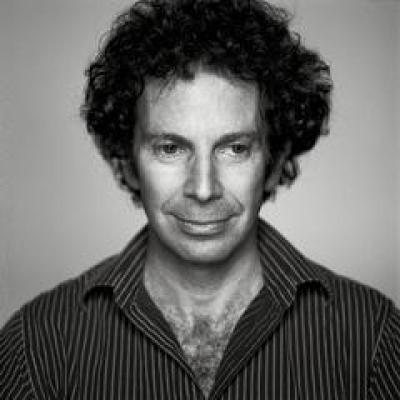
I think everything I do is based on my experience in the world in one way or another.
I think generally I'm kind of interested in subjective experience, what goes on inside someone's head, that being all they really know of the world.
I have a lot of anxiety about medical things for example. I don't think I'm particularly good at it, but I'd had the practice when I went into shooting Synecdoche. It can be somewhat gratifying, too, because I don't have that relationship with other adults where I need to comfort them or they come to me for that.
There is so much crap in the world, both in show and other businesses, that I try to be vulnerable myself, in the hopes that there is some truth I can get to, that makes people feel less alone in the world.
I don't think I've had a lonely moment in my life.
I'm old enough, by a long shot, to remember going to the library and spending days researching. If I was looking for a line from a poem or something else I needed, that would be the trip I would have to take.
There are things that aren't represented in movies that are a big part of everyone's life. This is a movie about health and about the body.
Writing is a journey into the unknown.
I think I've had pretty good experiences for the most part with the people who have directed my screenplays. It's more that I wanted to see what it would be like if I didn't have to collaborate with anybody, to have a sense of purity of the thing from beginning to end. I liked doing it. It's really different from writing. Directing is a more pragmatic experience, where you have to deal with the restrictions of time and money that force you to make certain decisions you don't have to make when you're writing.
Clementine: This is it, Joel. It's going to be gone soon. Joel: I know. Clementine: What do we do? Joel: Enjoy it.
I really don't have any solutions and I don't like movies that do.
So when I write characters and situations and relationships, I try to sort of utilize what I know about the world, limited as it is, and what I hear from my friends and see with my relatives.
In a lot of movies, especially big studio ones, they're not constructed in any other way than to get people to like them and then tell their friends. It's a product.
There's theater in life, obviously, and there's life in theater.
I think directing and writing are very different jobs. Obviously, directing is a more social and managerial job. The other thing about directing is that it's a very, very pragmatic job, and writing isn't.
I like for people to figure things out for themselves. It's not like I have the right answer, but if I have a visceral reaction to something, I'm sure that other people will, too.
Humans are incapable of securely storing high-quality cryptographic keys, and they have unacceptable speed and accuracy when performing cryptographic operations. (They are also large, expensive to maintain, difficult to manage, and they pollute the environment. It is astonishing that these devices continue to be manufactured and deployed. But they are sufficiently pervasive that we must design our protocols around their limitations.)
I try when I'm writing to leave enough "space" for people to have their own interpretation, and not to direct it toward one conclusion. Then the audience would not be reacting, because they are being preached to or lectured at. I don't have that much to say that I think people should listen to me.
I really like when critics reveal their subjectivity and their humanity. I prefer it when people say nice things, but if they say not-nice things or things that are critical, I'm open to it and I accept it. I mean, I have to live with it. But I do think there's a dishonesty in not acknowledging that you're a person with an opinion. I think it's almost like a power grab.
I think you just assume that your memory is just sort of a video playback of your experience, but it's nothing like that at all. It's a complete refabrication of an event and a lot of it is made up, because you're filling in spaces.
I love working with actors. I love visual things. I always intended to be a writer who directs and a director who writes.
I'm in my mind a lot. I live there.
I think of myself as a guy who tries to write screenplays and now has tried to direct one. Anything more than that is meaningless and it gets in the way of being a real human being.
I've had to deal, a lot, with my own sense of intimidation at meeting famous people - especially actors, but really any famous people.
She was nice. Nice is good.
I will be dying and so will you, and so will everyone here. That's what I want to explore. We're all hurtling towards death, yet here we are for the moment, alive. Each of us knowing we're going to die, each of us secretly believing we won't.
I can talk endlessly about characters, or why someone did this or that, and what that dynamic and interaction is. I really love it, and I think that actors really respond positively to the fact that I like to talk about that stuff, because I'm not sure that all directors do.
I try to present something that is true so I don't further destroy the world with my contribution to it.
And so not only do you have to make that work, you can't really start putting the thing together in any form because some of the shots are very short and obviously many of them take so long, you're waiting months and months and months before you can see if it's going to be working emotionally.
I'm not a celebrity. I'm intentionally and defiantly not a celebrity. I don't have any interest in it. I don't have any talent for it. I keep my personal life out of my public life as cleanly as I can.
I don't write genre stuff in any form. I'm not interested in it. I always try to do the opposite of that.
The conventional wisdom is - people say this all the time - you should only write something when you're far enough away from it that you can have a perspective. But that's not true. That's a story that you're telling. The truth of it is here, right now. It's the only truth that we ever know. And I'm interested in that truth and the confusion being part of the experience and sorting it your way through and figuring it out.
If you ever got me, you wouldn't have a clue what to do with me.
I don't think screenwriting is therapeutic. It's actually really, really hard for me. It's not an enjoyable process.
Every day of your life, you have information that enters your head, and that information informs your understanding of things, or shifts it, or changes it, or deepens it, or confuses you. Every day, every moment of every day - it's like this thing that happens.
I think if something resonates, even if it's surreal, it's because it is relatable and I think that that's a core issue for me.
I'm trying to tell a story and do it truthfully.
There are so many people who are making movies now who can’t get any kind of distribution, so the market seems like it’s flooded.
Directing is a more pragmatic experience, where you have to deal with the restrictions of time and money that force you to make certain decisions you don't have to make when you're writing.
The world needs you. It doesn't need you at a party having read a book about how to appear smart at parties - these books exist, and they're tempting - but resist falling into that trap. The world needs you at the party starting real conversations, saying, 'I don't know,' and being kind.
David Lynch is very important to me, and he does dreamlike movies, but my dreams are not like David Lynch's dreams. I have no interest in copying anybody's work. It would never occur to me to want this to look like someone else's thing.
The only way to do something interesting is not care if you fail.
You spend most of your time as a director trying to move forward with the movie. It happens on a daily basis, if not more than once a day, that you are struggling with budgetary constraints. Whereas when you're writing, the limitation that you have is your imagination. So it's decidedly non-pragmatic.
I try to make things interesting and thought-provoking.
I do a lot of things intuitively. I'm not often consciously aware of what I'm doing. It's like in a dream: There's something going on that's powerful but you don't know exactly why.
I like titles that are a little difficult, because it's kind of counterintuitive.
I'm not working on anything. I was trying to write something new . . . I guess the goal for me now, at least at this point, is to try to direct again.
I can never watch anything I've been involved in, because I know it, and I know what the making of it was like, and I know what's been cut out and changed. I just know it.
The only honest and generous thing for me to do is to give people myself. That's all I've got as an artist, so I want to do that in an unflinching way.
If you create something that is asking for people to respond as they're going to respond, you have to allow them to respond as they're going to respond. Some of the people are going to be uninterested and some people are going to be mad for some reason, which is their business. That's just the way the world is.
I have ideas written down some places, but usually I can't find them. I'm not very organized.
I don't subscribe to anything. I sit there and I try to think about what seems honest to me.
I was trying to figure out what a memory feels like.
Directing was a big learning experience for me because I had to deal with every aspect of everything-all this constant decision-making, with people asking you questions at every moment, and you have to have answers for them all.
I spend a lot of time in preproduction working with authors, and a lot of time in postproduction.: editing, music, all that sort of stuff. Casting. On the set there's not a lot for me to do.
I just try to be honest, because I think that's part of my job description as a writer.
Meet me in Montauk.
I do have some theatrical background. I've written plays and seen plays and read plays. But I also read novels. One thing I don't read is screenplays.
Sand is overrated. It's just tiny little rocks.
We're all one thing, like cells in a body. 'Cept we can't see the body. The way fish can't see the ocean. And so we envy each other. Hurt each other. Hate each other. How silly is that? A heart cell hating a lung cell.
I like actors - I used to be one.
Before you start production, you have characters you have created without actors in mind, then all of a sudden you've got actors. They bring an enormous amount in creating these characters, and creating the dynamics between the characters that you've written.
When I'm writing, I'm trying to immerse myself in the chaos of an emotional experience, rather than separate myself from it and look back at it from a distance with clarity and tell it as a story. Because that's how life is lived, you know?
Everything is more complicated than you think. You only see a tenth of what is true.
There is a lot of management going on with directing. Maybe that was the biggest surprise-just the amount of tending that I had to do. The different personalities . . . It's not my way, and it's never been my function before as a writer. I tend to be a moody and somewhat withdrawn person, and I felt very clearly that I had to throw that away because that wasn't allowed here - there were other people who were going to be filling that role. Sometimes it became exhausting, especially around the eleventh hour of the day.
Story ideas, but it's also musing on stuff that I'm thinking about. This leads me to this and this leads me to this. They're kind of random and haphazard. Often I can't find anything. Somehow, by doing that, even though I don't necessarily refer to them in a specific way, I have some sort of architecture in my head.
As a kid, I had a background in theater.
The sad thing about working on a movie is that you can never see the movie.
When I found myself in that situation - that actors are like children, I tried to be successful. And when it worked and I figured out how to communicate that things were good - or at least okay - then I felt pleased.
I have a background in theater, so I have experience with actors. I like actors - I used to be one.
I think now that I've tried directing, I'm not interested in doing adaptations anymore. I could do an adaptation of someone else's work that I would write, but the idea of taking someone else's material entirely doesn't interest me. One of the things that I found really helpful, at least in my mind - and I've never discussed this with the actors or with the people I work with - is that being a neophyte in directing, I feel like I have a kind of authority simply because I'm the writer as well.
Yeah, once we decided to use that replacement animation, and the seams are a function of that animation, and other movies paint those out, we decided we wanted to keep the presence of the animation and the type of animation that it was rather than make it look polished. It created a kind of vulnerability, I think.
The way I work is not the way that you work, and the whole point of any creative act is that. What I have to offer is me, what you have to offer is you, and if you offer yourself with authenticity and generosity I will be moved.
I choose to write characters from the inside because I feel like that's the way I'm gonna get the most honest version of them.
Failure is a badge of honor. It means you risked failure. And if you don’t risk failure, you’re never going to do anything that’s different from what you’ve already done or what somebody else has done.
My time on the set is the least of my involvement. Most of my time is in pre-production and post-production.
As a writer, or as a filmmaker, you have to present yourself, and part of what yourself is is what you're interested in, or what you think is funny, or what you think is sad, or what you think is horrible.
Seriously, I don't consider myself a writer. I don't think I have writing talent. But I will continue to do it.
Scary is time passing and sickness and dying and regret and isolation and loneliness and relationship problems - as opposed to a guy in a hockey mask, which didn't seem that scary.
The difference between a movie and a play is that the production you end up with is the production. If a movie that I spent time on turns out to be crap, it's never going to be made again.
I tend to not only read reviews, but also every little stupid thing online. It's a very bad idea, and there's a lot of angry people in the world. And it's weird to absorb all that weirdness.
We're all subjective beings and trapped in our own realities and our own biographical stories and physical bodies and our histories - and that's the only way we can experience the world.
I think if I've worked anything through with screenwriting it's that I'm not going to be able to work anything through.
I have a personality that tends to be somewhat compulsive, and I do tend to think in a circular way. I dwell on the same things over and over and I try to figure out different ways of looking at the same issue.
I've kind of come to the conclusion that what passes for realism in movies has nothing to do with reality and that my stuff is more realistic than that.
I don't have a style. I wouldn't say I have a style as a writer, either. I know people have said "This is what he does," but when I'm writing, I don't think about that. I don't think about a style.
The end is built into the beginning.
Say who you are, really say it in your life and in your work. Tell someone out there who is lost, someone not yet born, someone who won’t be born for 500 years. Your writing will be a record of your time. It can’t help but be that. But more importantly, if you’re honest about who you are, you’ll help that person be less lonely in their world because that person will recognise him or herself in you and that will give them hope.
People will say things after a screening that it affects them in a certain way, which is why I don't like to explain what certain things are about. I want them to have that. It limits people's ability to understand something if I say it's "about this." That's happened to us a bunch on this.
I studied acting at Boston University. I was in the theater department there. Somewhere in there I decided that wasn't what I was going to do and I went to the B.F.A. film program at N.Y.U.
You and I share the same DNA. Is there anything more lonely than that?
The passionate ones, the ones who go after what they want, may not get what they want, but they remain vital, in touch with themselves, and when they lie on their deathbeds, they have few regrets.
I think dreams are metaphors. Everything you do in writing is metaphorical. So it seems like the same arena to me.
I feel like I want to keep moving toward idiosyncracy. Personal, personal, personal.
I think that people create the world that they live in. Your existence is very subjective, and you tell stories and organize the world outside of you into these stories to help you understand it.
There are nearly thirteen million people in the world. None of those people is an extra. They're all the leads of their own stories. They have to be given their due.
I think I've had pretty good experiences for the most part with the people who have directed my screenplays.
From my vantage point in writing a story, I can't and don't and have no interest in thinking about the level of sophistication of the audience. I can only think about what interests me, and maybe what I would want to see if I were watching the movie. To me, that's the key to writing something that's not pandering.
Constantly talking isn't necessarily communicating.
I do like escapism. I like going to the movies on a Friday night and seeing something fun.
I think that people have expectations of themselves and other people that are based on these fictions that are presented to them as the way human life and relationships could be, in some sort of weird, ideal world, but they never are. So you're constantly being shown this garbage and you can't get there.
Why do I fall in love with every woman I see that shows me the least bit of attention?
I do have, at different times, a certain kind of self-consciousness in the world, an insecurity.
I do throw out a lot of ideas, and I forget completely about them.
I hate a movie that will end by telling you that the first thing you should do is learn to love yourself. That is so insulting and condescending, and so meaningless. My characters don't learn to love each other or themselves.
There's no way to approach anything in an objective way. We're completely subjective; our view of the world is completely controlled by who we are as human beings, as men or women, by our age, our history, our profession, by the state of the world.
We try to organize the world, which isn't organized the way our brains want to organize it. We tell stories about the people in our lives, we project ideas onto them. We project relationships with people, we make our lives into stories. I don't think we can avoid doing that.
There are too many ideas and things and people. Too many directions to go. I was starting to believe the reason it matters to care passionately about something, is that it whittles the world down to a more manageable size.
I'm interested in trying to explore what I think is the truth at a given time in my life, and part of the process of being honest is - in my mind - talking about the idea that you're watching a movie.
My point of view comes more from the literature I've read and the comedy of the era. When I was a kid, coming across National Lampoon Magazine, that was a big thing. I suddenly felt like there were other people that felt the way I did, and there was a way of expressing and communicating this worldview.
There's a point I can get to where I start writing character and then through the dialogue, after all of this preparation, the thing starts to feel like it's a character developing through the dialogue. A lot of character traits do come from writing dialogue, but I have to be ready to do it.
I do believe you have a wound too. I do believe it is both specific to you and common to everyone. I do believe it is the thing about you that must be hidden and protected, it is the thing that must be tap danced over five shows a day, it is the thing that won't be interesting to other people if revealed. It is the thing that makes you weak and pathetic. It is the thing that truly, truly, truly makes loving you impossible. It is your secret, even from yourself. But it is the thing that wants to live.
I want to create situations that give people something to think about.
Do not simplify. Do not worry about failure. Failure is a badge of honour. It means you risked failure.
There really is only one ending to any story. Human life ends in death. Until then, it keeps going and gets complicated and there's loss. Everything involves loss; every relationship ends in one way or another.
I wanted to deal with someone's idea of their relationship.
Everything I've written is personal - it's the only way I know how to write.
It occurred to me that every work of art is a synecdoche, there's no way around it. Every creative work that someone does can only represent an aspect of the whole of something. I can't think of an exception to that.
If I were doing somebody else's script or I adapted a book by Philip Roth, on set there could be a million different interpretations of the material and people could argue with me. Certainly on Synecdoche, New York we had discussions and arguments, but I felt like I had authority because I'm a writer.
Sometimes I don't like the books that I'm reading.
You are what you love. Not what loves you.
People ask me all the time, "What are your influences? Are you trying to do Beckett?" It's like, "No, I'm trying to do me." Whatever that is. I don't know what that is, but that's the basis. I'm trying to be true and I'm trying to be honest.
When I'm writing a script, before I can write dialogue or anything, I have two or three hundred pages of notes, which takes me a year. So, it's not like "what happens next." I've got things that I'm thinking about but I don't settle on them. And if I try to write dialogue before then, I can't. It's just garbage.
When you approach middle age, lots of stuff happens. Your body is aging, you're watching people around you get sick, you're watching people die, your mortality becomes very present at that point in your life.
I know that as a very young child, I was afraid of death. Many children become aware of the notion of death early and it can be a very troubling thing. We're all in this continuum: I'm this age now, and if I live long enough I'll be that age. I was 20 once, I was 10, I was 4. People who are 20 now will be 50 one day. They don't know that! They know it in the abstract, but they don't know it. I'd like them to know it, because I think it gives you compassion.