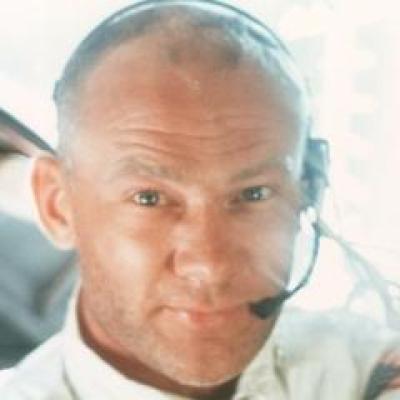
Over the years, I think I've matured in my spiritual evolution and development to understand a bit more than the narrow religious thinking - to move beyond that through a sort of perfection of the grandiose nature of the universe, and how perfect it is it in its sense and how satisfied we should all be in our place in that.
There are always door openings. And gradually, it accumulates. The opportunities open up in front of you.
The decision to go to the moon is now appreciated and associated with President Kennedy's speech, but somebody else had told him it was a good idea. It turned out to be a good commitment, but it was a unique situation.
Space architectures capable of supporting a permanent human presence on Mars are extraordinarily complex, with many different interdependent systems.
My favourite thing to do on this planet is to scuba dive.
My first inclination is to be a bit skeptical about the claims that human-produced carbon dioxide is the direct contributor to global warming.
You are not going to change the minds of people who are looking for attention.
The much-hyped Ares 1-X was much ado about nothing.
The view from space is like having a globe on your desk -- it's a broadening experience.
There's a historical milestone in the fact that our Apollo 11 landing on the moon took place a mere 66 years after the Wright Brothers' first flight.
It's time to open the space frontier to citizen explorers.
The beauty of Hawaii probably surpasses other places. I like the Big Island and the two mountains, Mauna Loa and Mauna Kea, where you can look out at the stars.
As we begin to have landings on the moon, we can alternate those with vertical launch of similar crew modules on similar launch vehicles for vertical-launch tourism in space, if you want to call it that adventure travel.
We feel that this stands as a symbol of the insatiable curiosity of all mankind to explore the unknown.
I feel we need to remind the world about the Apollo missions and that we can still do impossible things.
I think humans will reach Mars, and I would like to see it happen in my lifetime.
Exploration is wired into our brains. If we can see the horizon, we want to know what's beyond.
I think the American Dream used to be achieving one's goals in your field of choice-and from that all other things would follow. Now, I think the dream has morphed into the pursuit of money: Accumulate enough of it, and the rest will follow. We've become more materialistic. For balance, I think we need to get back to idealism and patriotism, but also be realistic with our monetary goals.
Space is not just going up and coming back down again. Space is getting into orbit and being there, living there, establishing a presence, a permanence.
Exploring Mars is a far different venture from Apollo expeditions to the moon; it necessitates leaving our home planet on lengthy missions with a constrained return capability.
We should go boldly where man has not gone before. Fly by the comets, visit asteroids, visit the moon of Mars. There's a monolith there. A very unusual structure on this potato shaped object that goes around Mars once in seven hours. When people find out about that they're going to say 'Who put that there? Who put that there?' The universe put it there. If you choose, God put it there.
The moon I see now is the same moon I saw before. Except that before, when I looked at it, it was in anticipation of what it would be like when I got there. That's behind me now.
When I was a little kid, we only knew about our nine planets. Since then, we've downgraded Pluto but have discovered that other solar systems and stars are common. So life is probably quite prevalent.
I understand that Detroit was a pretty rough place to grow up in the '70s and '80s.
As we reflect back upon the tragic loss of Challenger and her brave crew of heroes who were aboard that fateful day, I am reminded that they truly represented the best of us, as they climbed aloft on a plume of propellant gasses, reaching for the stars, to inspire us who were Earthbound.
Apollo 11 will probably go down in history as one of the major responses of two nations facing each other with threatening technologies - sometimes called mutually assured destruction. It was also the America's response to the apparent superiority of the Russians in putting objects into space before USA could.
I want to reach a new generation. That's why I am Twittering now. I have a BlackBerry, an iPhone and a Mac.
Armstrong described the lunar surface as 'beautiful.' I thought to myself, 'It's not really beautiful. It's magnificent that we're here, but what a desolate place we are visiting.'
There may be aliens in our Milky Way galaxy, and there are billions of other galaxies. The probability is almost certain that there is life somewhere in space.
Timing has always been a key element in my life. I have been blessed to have been in the right place at the right time.
Whenever I gaze up at the moon, I feel like I'm on a time machine. I am back to that precious pinpoint of time, standing on the foreboding - yet beautiful - Sea of Tranquility. I could see our shining blue planet Earth poised in the darkness of space.
Once you've been first, it cannot be done again. Not by you, not by anyone else.
Any observations from the Moon or a sense of realising this or that about the greater meaning of things wasn't as influential for me as the experience of coming back and dealing with being a person who's been to the Moon.
Do we really need these big, gigantic, heavy rockets? What if we launch a rocket that's empty, and its sole purpose is to act as a source of fuel on the Moon? Who should build that? Well, I think the U.S. should build that.
In space, you don't get that much noise. Noise doesn't propagate in a vacuum.
Sending a couple of guys to the Moon and bringing them back safely? That's a stunt! That's not historic.
History will remember the inhabitants of this century as the people who went from Kitty Hawk to the moon in 66 years, only to languish for the next 30 in low Earth orbit. At the core of the risk-free society is a self-indulgent failure of nerve.
Kids, help your parents if they don't know how to use a smartphone.
America must dream again, and have the faith to achieve the dream.
Heavy lifting doesn't need to be heavy spending if we do the job right.
The g-forces increased and I wasn't able to continue to hold the camera against the window, so I had to lay it back against my chest, but still continued to photograph the re-entry until there was no more unusual visual effects of the energy in the atmosphere. And it was very comforting to understand that the people in Houston, the controllers, had very high confidence that we were on the right path.
The first footfalls on Mars will mark a historic milestone, an enterprise that requires human tenacity matched with technology to anchor ourselves on another world.
The way I see it, what is going to come out of the moon activities is a respect for U.S. leadership.
I want people to go into space, to orbit around the world a few times, even to stay there for 24 hours and then come back to where they took off. And I also want people with a low income to be able to do that, not only rich people.
Going back to the moon is not visionary in restoring space leadership for America. Like its Apollo predecessor, it will prove to be a dead end littered with broken spacecraft, broken dreams and broken policies.
At the core of the risk-free society is a self-indulgent failure of nerve.
My first biography written in '73 was not 'Journey To The Moon.' It was 'Return To Earth.' Because for me, that was the more difficult task - disappointment.
By venturing into space, we improve life for everyone here on Earth - scientific advances and innovations that come from this kind of research create products we use in our daily lives.
We have the ability, at such high fidelity, to simulate the physical world through computers. But when the spiritual world or human behavior comes into play, we don't have a very good model for that at all.
The urge to explore has propelled evolution since the first water creatures reconnoitered the land. Like all living systems, cultures cannot remain static; they evolve or decline. They explore or expire. . . . Beyond all rationales, space flight is a spiritual quest in the broadest sense, one promising a revitalization of humanity and a rebirth of hope no less profound than the great opening out of mind and spirit at the dawn of our modern age.
The universe is the way it is. It's not going to be changed by supplications.
Trips to Mars, the Moon, even orbit, will require that we provide astrotourists with as many comforts from home as possible, including paying each other.
I'm not in favor of just taking short-term isolated situations and depleting our resources to keep our climate just the way it is today.
Mars is there, waiting to be reached.
A family needs to work as a team, supporting each other's individual aims and aspirations.
In Mars, we've been given a wonderful set of moons where we can send continuous numbers of people.
History gets reinterpreted as time goes on. Many times, the participants are lost in the retelling of the story.
My own American Dream was to serve my country as best I could and make a difference in America - and in the world.
The final frontier may be human relationships, one person to another.
When you're in a spacecraft, you need to know what things you can touch and what things you shouldn't touch!
They didn’t tell me I was going into space until after they locked the shuttle doors and started counting down.
I've led a life of such structured discipline and always had a goal in mind of knowing what I was doing, from West Point to the Air Force combat, MIT, looking for new things to study and get involved in. And then I got into the space program, and how disciplined can you get?
We could have human intelligence in orbit around Mars, building things there.
The energy varies with the square of the velocity, so if you need five times the velocity, that's 25 times the energy.
I still say, 'Shoot for the moon; you might get there.'
We need the next generation to be motivated and to push technological boundaries, to seek out new innovations.
Mars has a bit of air pressure; maybe we can build up that atmosphere to be a bit more accommodating to humans.
I really hate to be put in the position of trying to justify something, a decision that was made. I'm a military guy: when a decision is made, I go along with it, whatever the manufactured controversy and criticism.
My sister called me "Buzzard" when I was a baby - she couldn't say "Brother" so I've been Buzz my whole life.
Fear and worry are emotions that cloud the mind from being able to think clearly, to remember what the procedures are to deal with that emergency.
I believe that space travel will one day become as common as airline travel is today. I'm convinced, however, that the true future of space travel does not lie with government agencies -- NASA is still obsessed with the idea that the primary purpose of the space program is science -- but real progress will come from private companies competing to provide the ultimate adventure ride, and NASA will receive the trickle-down benefits.
The surface of the moon is like nothing here on Earth! It's totally lacking any evidence of life. It has lots of fine, talcum-powderlike dust mixed with a complete variety of pebbles, rocks, and boulders. Many pebbles, fewer rocks, and even fewer boulders naturally make up its surface. The dust is a very fine, overall dark gray. And with no air molecules to separate the dust, it clings together like cement.
When I am getting ready to cross a street, I look both ways before crossing. My bones, my muscles, are not what they used to be, so I am careful when I go up and down stairs, because I've heard stories of older people falling and having very disabling injuries. I have enough things that begin to go a little bit wrong as I get a little bit older.
We'll get to the details of what's around here, but it looks like a collection of just about every variety of shape - angularity, granularity, about every variety of rock.... The colors - well.... There doesn't appear to be too much of a general color at all; however, it looks as though some of the rocks and boulders are going to have some interesting colors to them. Over.
To appropriately respond to an emergency requires a very clear mind, to cooly analyze what the observations are and how to fix it.
To me, money is a commodity that a person must have to function, not a goal in itself.
We can continue to try and clean up the gutters all over the world and spend all of our resources looking at just the dirty spots and trying to make them clean. Or we can lift our eyes up and look into the skies and move forward in an evolutionary way.
For every winner, there's a loser. And that person didn't really need to lose. They just didn't understand the game plan.
As a student, I wrote English reports on science fiction.
Many say exploration is part of our destiny, but it's actually our duty to future generations and their quest to ensure the survival of the human species.
If you want poets in space, you'll have to wait.
I poured the wine into the chalice our church had given me. In the one-sixth gravity of the moon the wine curled slowly and gracefully up the side of the cup. It was interesting to think that the very first liquid ever poured on the moon, and the first food eaten there, were communion elements.
There's no doubt who was a leader in space after the Apollo Program. Nobody came close to us. And our education system, in science, technology, engineering and math, was at the top of the world. It's no longer there. We're descending rather rapidly.
Unfortunately, pioneers will always pave the way with sacrifices.
The feeling of reduced gravity and the limitations of the space suit resulted in a slow-motion movement. Perhaps not too far from a trampoline, but without the springiness and instability.
I want to keep on the move, keep stimulated and challenged.
I inherited depression from my mother's side of the family. Her father committed suicide. She committed suicide the year before I went to the moon.
During the divorce process, I lived alone and tended to get extremely down on myself.
There are a lot of reasons for not doing something. And if humanity had come up with all the reasons for not doing something we wouldn't have spread across the Earth the way we have. There's a curiosity, and I would submit that that curiosity will put human beings on the surface of Mars.
Not everyone can be an astronaut and go into space, some people with sufficient resources can purchase and fly sub-orbitally thanks to various companies and for more money (considerably) fly into orbit.
If we can conquer space, we can conquer childhood hunger.
I expected the unexpected and went [on the Moon] with an open mind. I think the visual scene was described by my words on first landing - "magnificent desolation." Magnificent for the achievement of being there, and desolate for the eons of lifelessness.
Some things just can't be described. And stepping onto the moon was one of them.
We need to have people up there who can communicate what it feels like, not just pilots and engineers.
I think we need to move to the moons of Mars and learn how to control robots that are on the surface. It's not the impatient way of getting there, but Mars has been there a long time.
Retain the vision for space exploration. If we turn our backs on the vision again, we're going to have to live in a secondary position in human space flight for the rest of the century.
Everyone should take their hats off to Neil Armstrong. He is a humble guy who doesn't wave his own flag.
If we go back to the moon, we're guaranteed second, maybe third place because while we are spending all that money, Russia has its eye on Mars. Landing people on the moon will be terribly consuming of resources we don't have. It sounds great - 'Let's go back. This time we're going to stay.' I don't know why you would want to stay on the moon.
I am definitely not rich.
This has been far more than three men on a mission to the Moon; more still than the efforts of a government and industry team; more, even, than the efforts of one nation. We feel this stands as a symbol of the insatiable curiosity of all mankind to explore the unknown.
Mars has been flown by, orbited, smacked into, radar examined, and rocketed onto, as well as bounced upon, rolled over, shoveled, drilled into, baked and even blasted. Still to come: Mars being stepped on.
The best way to study Mars is with two hands, eyes and ears of a geologist, first at a moon orbiting Mars... and then on the surface.
No dream is too high for those with their eyes in the sky!
Instead of planning the retirement of the Space Shuttle program, America should be preparing the shuttles for their next step in space: evolving, not shutting them down and laying off thousands of people.
The pilgrims on the Mayflower landed at Plymouth Rock. To my knowledge, they didn't wait around for a return trip to Europe. You settle some place with a purpose. If you don't want to do that, stay home. You avoid an awful lot of risks by not venturing outward.
Unfortunately, kids are led to believe things are easier to achieve than they really are.
Most people never believed in the real possibility of going to the moon, and neither did I until I was in my twenties.
Is the destiny of the human species to sit back and play with our mouse and computer and imagine, fantasize?
It's been one of the greatest challenges that ever came along in my life; it was one of the more difficult things to do.
My Sunday mornings are spent in a recovery meeting in Pacific Palisades.
Fighter pilots have ice in their veins. They don't have emotions. They think, anticipate. They know that fear and other concerns cloud your mind from what's going on and what you should be involved in.
A mind concerned about danger is a clouded mind. It's paralyzing.
I was given permission to serve myself Communion, with wine and a wafer, on the surface on the Moon. But I was advised not to say anything about it at the time. Someone had strongly objected to the Apollo 8 crew reading from the Bible. We didn't want to get into any further trouble with the religious critics.
The biggest benefit of Apollo was the inspiration it gave to a growing generation to get into science and aerospace.
Neil Armstrong was the first man to walk on the moon. I am the first man to piss his pants on the moon.
Bravery comes along as a gradual accumulation of discipline.
There's a need for accepting responsibility - for a person's life and making choices that are not just ones for immediate short-term comfort. You need to make an investment, and the investment is in health and education.
I think the public needs to be reminded just how much inspiration and intention was given throughout the world to be bold, to send human beings to the moon in the '60s and the '70s. It's important now to bring together the nations that weren't able to do it then and help them do it. We need to move forward.
Does it make sense for the U.S. to expend hundreds of billions of dollars to mount a new Apollo-style program to return to the moon? Or have we blazed that trail? Shouldn't we help other nations achieve this goal with their own resources but with our help?
NASA needs to focus on the things that are really important and that we do not know how to do. The agency is a pioneering force, and that is where its competitive advantage lies.
There's no guarantee that the United States will be around 200 years from now.
Knowledge of the past and an optimistic view of the present give you great opportunities.
It's real easy to manufacture what you think the people want to hear. But that's not very honest.
When we set out to land people on the surface of Mars, I think we should as a nation, as a world, commit ourselves to supporting a growing settlement and colonization there. To visit a few times and then withdraw would be an unforgivable waste of resources.
I wrote 'Reaching for the Moon' because I wanted to tell kids that all of us have a moon, a dream, that we can strive for. Even if you don't attain it, you can at least reach for it.