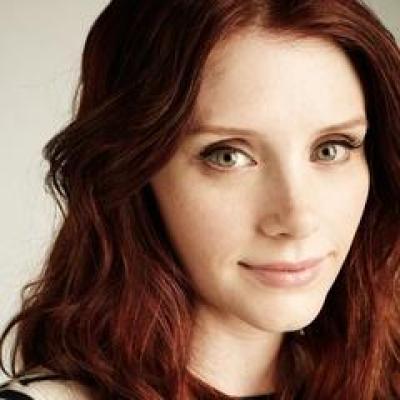
What I wasn't used to was being in front of the camera.
I thought that I had a really healthy relationship with food, and I went home to my parents' house for a week because I cut my foot, and was recovering. I just ate loads, ate family meals, went along with group activities. And I realized how unhealthy my relationship actually is with food.
On the spectrum of imagination, there are people who are more imaginative than others - I guess some kids are hardcore pretenders and have imaginary friends for years and other kids play and they have fun, but it's not quite as specific like that.
It's really about connecting to your own humanity and your own behaviors, and getting to a level of self-awareness so that you can have perspective and step outside of yourself and transform and become another person.
I'm a huge fan of the animated film 'The Land Before Time' and that was one of my favourite animated films when I was growing up.
It's just that the characters are speaking their mind. As opposed to it just being an expression, they're actually saying what's on their mind, and that's something that Tennessee Williams is really famous for. Shakespeare does that and Tennessee Williams does that. You crave that, when you're an actor, for sure.
I'm definitely not very insecure, but I have perfectionist tendencies, and I'll want things to be a certain way.
That is one of the hardest things I have ever had to do in my life, running through the jungle in heels. Because also, mud was often times three feet deep, and that was full on for sure.
The other thing I've been discussing with friends is: when you're born do you start at a zero, or five?
I had watched an episode of Black Mirror almost exactly a year prior to when I started shooting my episode. I was by myself in New Zealand, and my husband was like, "You have to see this show. It's so incredible."
I've always felt really lucky to get to work with really great filmmakers. For me, the whole objective is just to hopefully be of service to what they want.
But, working with directors whose history is in performance, I feel like there's a different kind of focus, as opposed to directors who are more prone to being really technically proficient or visual. I feel like there are two schools of both, and a director needs to have both.
When folks get to the best of their profession, people are like, "Who am I to give a critique to this individual who's reached mastery?".
I come from a little bit of a theatrical background. I started that way. I don't have a tremendous body of work or anything, but I went to drama school. And so, to get to do a piece where the characters get to talk a lot, and that isn't just about the spectacle or the set piece, or is simply visual or movement based. It was really wonderful for me, and juicy and exciting.
I didn't know how to check other people's feeds. When I started Instagram, it was just me posting! But then at some point, like eight months ago, I realized I could see what other people were sharing. It was so exciting and so fun, but it was like I'd already gotten into the rhythm of sharing and not worrying about what it was like compared to other accounts. I think that was kind of protective, in a way.
I actually gained 30 pounds [for the episode], and I haven't lost all of it yet so I haven't been like "I gained 30 pounds!" Because I don't know if people can tell the difference.
You can't become another person if you're not self-aware.
You do your best [ on auditions] and sometimes you win 'em over and sometimes you don't.
Social media is a performance like any other form of entertainment, and acknowledging that is important.
Right now as an artist, what I want to do is be a part of works that are unignorable. I couldn't be less interested in how people receive it, honestly. As long as it's unignorable.
Joe [Wright] reached out to me and sent me a treatment, and I said yes on the spot just from the treatment. Within six weeks, I was in Cape Town and there was a script [of Black Mirror episode 'Nosedive'], but I didn't realize until I received the full script that Rashida [Jones] and Michael [Schur] had worked on it. It's a particularly funny episode. Joe and I always looked at it as a satire; it has a lot of comedic elements to it.
In the culture we live in, there's this pervasive, shared agreement that there's a certain body type to admire, and it isn't actually based on anything real or substantive.
You go on Instagram, and it's just not a real reflection of what people do, and how much pain people are in every day. So that's my mental change.
I have nothing nice to say about Chris Pratt, of course. He's probably the greatest hero of our time in real life, honestly.
For me, whether or not a film has some kind of massive budget or is an independent film, or however it's getting made, it's always about the filmmaker and, hopefully, being a vessel for the filmmaker's vision. That's what really attracts me to projects.
The work that we do is so tricky because it rests on our shoulders, but it's also collaborative and part of it is trusting the people that you're working with.
I'm sure there's a range, but I think everyone can pretend.
I have very vivid dreams and nightmares, and my biggest fear is of some kind of dystopian future where we're advanced in every way except in our humanity.
It was such a paradox for me that the only thing I know how to do is act, but that the first thing I abandoned while writing were the characters
Sometimes I think to myself, "I wonder if Meryl Streep is ever like, 'Oh gosh, everyone thinks I'm so perfect! I wish that someone would give me a note.'"
I saw an episode - the second episode [of Black Mirror], "Fifteen Million Merits" - and I completely flipped out: "This is what my nightmares are made of. This is the most terrifying thing I've ever seen."
There was definitely a learning curve in terms of being on film, but being on a set was all good.
I feel like I almost didn't grow up in the business, because my parents worked so hard at sheltering us from that. I was raised in Connecticut. And I honestly wasn't aware that my dad was a celebrity until I moved to Los Angeles a year ago.
I've always had the perspective that roles come into my life when I need them most and sort of teach me lessons. The same can be true of films, films are released into society to aid in a lesson, inspire people, comfort people.
I didn't always want to act. My passion was writing, and it still is one of my primary passions to this day, but it wasn't until high school when I started acting in plays that it became a thought of something I might want to do. And when I applied to colleges, at NYU, I was able to study both writing and acting.
The ability to play pretend is something that everyone has access to; you see little kids doing it.
The clearer that division [of social media] is between it not being a reflection of reality, and being a complete make-believe world, the more we're helping ourselves.
My dad's more three-dimensional than Opie Taylor or Richie Cunningham. He even has a temper! He's a real person. But some people are disappointed by that.
I was in South Africa, and Joe [Wright] asked the same exact question that you just asked: "Have you ever seen an episode of Black Mirror?" I went back and played the video for Joe. The episode that I did is called "Nosedive," and it was a year to the week from when I first watched it. It was just very bizarre, this very weird coincidence.
What it's done for me is highlight the fact that we need to lean into the cartoon universe of social media.
Girls can do anything, for sure. Even running in the mud in heels.
You need to not be able to do anything else, to be in this business. If you have other options, in those unemployed moments, those other options will take precedent. From a directorial standpoint, I think it's really Freudian, the amount of trust I have in filmmakers because I have such a trusting relationship with my dad.
In the beginning [of my social media life], I started posting and someone I'm close to said, "you're only posting pictures of yourself in your grungy pajamas. You're an actress be aspirational." Then I was like, "I'm not living an aspirational life on a day-to-day basis." For a while after that I was only taking pictures of, like, objects.
For me personally, I don't go onto Twitter or Facebook, my hubby helps me out because sometimes I'm concerned that I'll see something that will upset me, and I don't have a way to work it out with that person.
When I work on a film, I always tend to relate to the crew.
I started taping my dad's auditions when I was 11, when he was auditioning actors for one of his movies. I would see, over and over again, that there wasn't just one actor for the role. It was really clear that there were a lot of people who could play a character really well, and it would always come down to something kind of weird and non-obvious as to why a person was cast. If you're not right, you're not right, but that's okay.
Joe Wright is incredible and I'm a huge admirer of his work in general, but specifically his aesthetics and poeticism.
The greatest sci-fis, in my mind, are two things: They're what-ifs - what if this happened, and you get to see it - but they're also these philosophical cautionary tales. They deal with the underlying themes beneath the what-if.
I felt very comfortable on a set - incredibly comfortable on a set, which is a real gift because that can be hugely intimidating.
I've learned to think in terms of having a long career. Actors can have very long careers that last until the day we die, but there will be moments when you'll feel like you're a failure or when you're disappointed in yourself.
I definitely managed to do different kinds of things. My focus is usually who the director is, because at the end of the day the director is the storyteller, what the movie is all about. I don't want to participate in something that I don't think is constructive storytelling.
When people just become numbers, and we stop relating to each other as human beings. And we don't have the agency to make choices that can positively affect another human being. I was watching something yesterday where Justin Timberlake took a picture of himself voting, and he might get thirty days in jail because it's a new law or something.
Sometimes acting, particularly in film, can feel so contained. You need to be small and not overplay things, so it's such a relief to be able to go as far as you can go with an emotion or a feeling or a speech.
I have an association that director means total authority. Director means they will never let you down. Director means just trust them and fulfill their vision, and know that the story will be told in its best incarnation.
To be perfectly honest, Christ Pratt is one of the greatest human beings I've ever met in my entire life. He really is. Everything about him was my favourite thing. I also really love how tall he is, 'cuz I'm kind of a tall girl and often times when I'm doing a movie I need to slouch, but I could stand tall and proud next to Chris Pratt.
I think my favourite memory from filming 'Jurassic World' would just be a compilation of me running through the jungle in heels, and just how absurd that really was. That that actually happened.
I definitely hope that I'm improving. If I'm not, there's a problem - I'm just coasting.
If someone down-votes you, or you don't get a like, or someone says something not cool, you project onto it the person or the people who have hurt you the most in life.
I'll run through things over and over and over again in my head and think, "How could I have done that better?" Silly things like that.
With The Help, I knew folks involved in the project peripherally. I wanted to audition for Hilly Holbrook and part of the initial feedback was: "No, Bryce is too nice." That's part of the reason why I really love auditions as well - you get to try out a character and try out different versions of a character.
I struggle immensely with celebrities of all kinds. I get clammy hands and turn a little purple.
Where I'm like,"no, I won't have that piece of bread, I'll have the veg." There's a different approach mentally that you have when you're in a safe space. Our body awareness in the West is ridiculous.
I feel like it's a subversive thing [a certain body type to admire] which keeps women preoccupied with something that doesn't matter, and takes up a lot of space, and prevents people from what they're meant to be doing.
I've never, ever, in my entire life, been upset at a casting choice.
The Village did a lot for me, of course, because it was my first movie.