
Avery brundage

For too long the world has failed to recognise that the Olympic Games and the Olympic Movement are about fine athletics and fine art.

The ancient Greeks kept women athletes out of their games. They wouldn't even let them on the sidelines. I'm not sure but that they were right.

Sport must be amateur or it is not sport. Sports played professionally are entertainment.

The Olympic Games belong to the athletes and not to the politicians.

Sport is an international phenomenon, like science or music.

The sportsman knows that a sport is a recreation, a game, an amusement and a pastime, but his eyes are fixed on a higher goal, on the most important thing in his life, which is his education or his vocation.

The Olympic Movement is a 20th century religion. Where there is no injustice of caste, of race, of family, of wealth.

The Olympic Games must not be an end in itself, they must be a means of creating a vast program of physical education and sports competitions for all young people.

As soon as you take money for playing sport, it isn't sport, it's work.

The 880-yard heel and toe walk is the closest a man can come to experiencing the panges of childbirth.
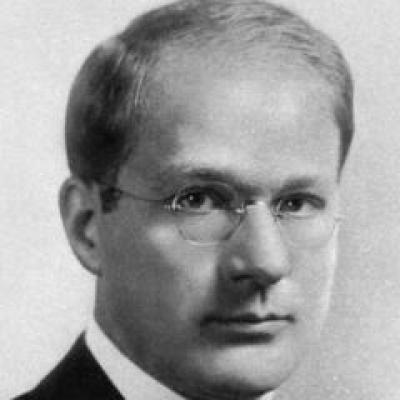
Author details

Avery Brundage: Biography and Life Work

Avery Brundage was a notable Civil engineer. The story of Avery Brundage began on September 28, 1887 in Detroit, Michigan, U.S.. The legacy of Avery Brundage continues today, following their passing on May 8, 1975 in Garmisch-Partenkirchen, West Germany.

Avery Brundage was the fifth president of the International Olympic Committee , serving from 1952 to 1972, the only American and first non-European to attain that position. Brundage is remembered as a zealous advocate of amateurism and for his involvement with the 1936 and 1972 Summer Olympics , both held in Germany.

Legacy and Personal Influence

Personally, Avery Brundage was married to Elizabeth Dunlap, Mariann Charlotte Katharina Stefanie, Princess Reuss.

Philosophical Views and Reflections

On his return, he related in an article for The Saturday Evening Post that he had confronted Soviet officials with information from defectors stating that the USSR was running year-round training camps and giving athletes material inducements for success. He also repeated the Soviet response, which questioned the defectors' integrity: "These men are deserters, traitors. Would you attach any truth to their statements had they been Americans and had turned against your country?" Since Brundage did not comment on the response, there was a storm of controversy in the press, which accused Brundage of being a Soviet dupe.

After Munich, Brundage departed the Games, which had grown beyond his comprehension and his capacity to adjust. The NOCs and the were revolting against his arbitrary administration; violence had invaded his holy mountain and was giving every indication of returning; despite all his efforts to reach out to the world through athletics, he stood accused of bigotry and both race and class prejudice, not to mention the denunciations proclaiming him politically naive ... Few mourned his departure from the Olympic scene, and the International Olympic Committee turned to his successor, who, its members hoped, would be better suited to handle the new items on its agenda.

EQ
Empery Quotes
Inspire · Reflect · Repeat