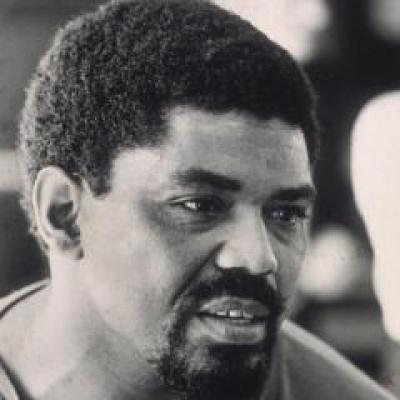
DeFrantz's study...is not the first book about the protean Ailey, who was born in hardscrabble Texas in 1931 and died in 1989 after creating close to 80 works. But it is perhaps the most comprehensive, combining biography, criticism, the analysis of dance criticism, and a sort of corporate history, siting the now firmly established Alvin Ailey American Dance Theater in the international cultural landscape.
We still spend more time chasing funds than we do in the studio in creative work.
If you live in the elite world of dance, you find yourself in a world rife with racism. Let's face it.
My lasting impression of Truman Capote is that he was a terribly gentle, terribly sensitive, and terribly sad man.
Money is a never-ending problem.
I am trying to show the world that we are all human beings and that color is not important. What is important is the quality of our work.
Racism tears down your insides so that no matter what you achieve, you're not quite up to snuff.
Making dances is an act of progress; it is an act of growth, an act of music, an act of teaching, an act of celebration, an act of joy.
To be who you are and become what you are capable of is the only goal worth living.
I always want to have more dancers in my company.
Dance is for everybody. I believe that the dance came from the people and that it should always be delivered back to the people.
My feelings about myself have been terrible.
It will take very sophisticated marketing to achieve our aim of bringing more black people into the theater.
My dancers must be able to do anything, and I don't care if they are black or white or purple or green. I want to help show my people how beautiful they are. I want to hold up the mirror to my audience that says this is the way people can be, this is how open people can be.
Choreography is mentally draining, but there's a pleasure in getting into the studio with the dancers and the music.
One of the worst things about racism is what it does to young people.
No matter what you write or choreograph, you feel it is not enough.
I'm attracted to long-legged girls with long arms and a little head.
But the dance speaks to everyone. Otherwise it wouldn't work.
One of the processes of your life is to constantly break down that inferiority, to constantly reaffirm that I Am Somebody.
Lena Horne is the sweetest and most adorable woman in the world.
Everything in dancing is style, allusion, the essence of many thoughts and feelings. The abstraction of many moments.
Sometimes you feel bad about yourself when there's no reason to.
The creative process is not controlled by a switch you can simply turn on or off; it's with you all the time.
I wanted to explore black culture, and I wanted that culture to be a revelation.