If the student could give up her work on my advice, she had better give it up without it. One does not study for a goal. The goal is a mere accident.
French is, in many ways, more difficult for an English-speaking person to sing. It is so full of complex and trying vowels. It requires the utmost subtlety.
When the student has her voice under complete control, it is safe to take up the lyric repertoire of Mendelssohn, Old English Songs, etc. How simple and charming they are!
One does not study for a goal. The goal is a mere accident.
In the piano, one has the instrument complete before he begins; but in the case of the voice, the instrument has to be developed by study.
Acquiring a repertoire in these days, when the vocal literature is so immense, so overwhelming, that the student with sense will devote all his energies to work and not imagine himself a martyr to art.
The real artist has no idea that he is sacrificing himself for art. He does “what he does for one reason and one reason only-he can't help doing it”
Inspired by the purse rather than the soul, the mercenary side fairly screams in many of the works put out by every day American publishers.
Vocal study before age 20 is likely to be injurious, though some survive it in the hands of very careful and understanding teachers.
The student who deceives himself into thinking that he is giving his life like an ascetic in the spirit of sacrifice for art, is the victim of a deplorable species of egotism.
We are rich in the quantity of songs rather than in the quality. The singer has to go through hundreds of compositions before he finds one that really says something.
Just as the bird sings or the butterfly soars, because it is his natural characteristic, so the artist works.
The sincerity of the art worker must permeate the song as naturally as the green leaves break through the dead branches in springtime.
A student will send me an urgent appeal to hear her, saying she is poor and wants my advice as to whether it is worth while to continue her studies. I invariably refuse such requests.
Author details
Alma Gluck: Biography and Life Work
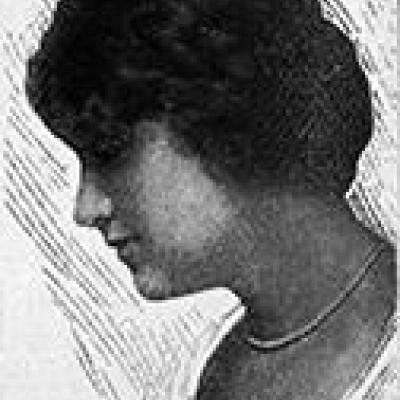
Alma Gluck is recognized for significant cultural contributions. The story of Alma Gluck began on May 11, 1884 in Iași, Romania. The legacy of Alma Gluck continues today, following their passing on October 27, 1938 in Manhattan, New York City, New York.
Gluck was born as Reba Feinsohn to a Jewish family in Iași , Romania , the daughter of Zara and Leon Feinsohn. Gluck moved to the United States at a young age in 1889. Although her initial success came at the Metropolitan Opera in New York City , Gluck later performed widely in America and became an early recording artist. Although various sources claim that her recording of " Carry Me Back to Old Virginny " for the Victor Talking Machine Co. was the first celebrity recording by a classical musician to sell one million copies, Victor ledgers do not support the claim—nor did Gluck ever make such a claim herself. It was awarded a gold disc , only the seventh to be granted at that time. Gluck was a founder of the American Woman's Association.
Legacy and Personal Influence
Personally, Alma Gluck was married to Bernard Glick, Efrem Zimbalist, Sr..
Philosophical Views and Reflections
Gluck retired to New Hartford, Connecticut , to raise her family in 1925. Although by background an assimilated and nonpracticing Jew who continued to consider herself ethnically Jewish, she found herself attracted, along with her husband Efrem, to Anglican Christianity , and they regularly attended the Episcopal Church in New Hartford. Efrem Jr. and Maria were both christened there, and the couple placed Efrem in an Episcopal boarding school in New Hampshire . Efrem Jr. later became active in evangelical circles and was one of the founders of Trinity Broadcasting Network . Gluck recorded several Christian hymns in duet with Louise Homer , among them " Rock of Ages ", " Whispering Hope ", " One Sweetly Solemn Thought ", and " Jesus, Lover of My Soul ".
After a long illness, she was taken to the Rockefeller Institute Hospital in Manhattan, New York City , but died from liver failure several days later, on October 27, 1938, at the age of 54.