Evil is a form of incompetence.
History, well taught, is the demythologising of the past... Take any important issue of our time - Northern Ireland, Nuclear Disarmament, Race, The Welfare State, South Africa - and it becomes impossible to seriously confront any of them without understanding their historical background.
No one understood better than Stalin that the true object of propaganda is neither to convince nor even to persuade, but to produce a uniform pattern of public utterance in which the first trace of unorthodox thought immediately reveals itself as a jarring dissonance.
Hitler had a plausible case to argue when he claimed that the Anschluss was only the application of the Wilsonian principle of self-determination.
Spending a weekend with Hitler would have been boring in the extreme, although you would have had a greater certainty in coming back alive.
Bullock by name, and Bullock by nature.
If the country is to survive as a democracy it will depend on voters who understand how our political institutions have evolved and the events that went into their creation. A nation's sense of its history is indistinguishable from its social cohesion.
Hitler's dictatorship rested on the constitutional foundation of a single law, the Enabling Law.
The corruption of people is to behave in an inhuman way.
Democracy is not about making speeches. It is about making committees work.
Author details
Alan Bullock: Biography and Life Work
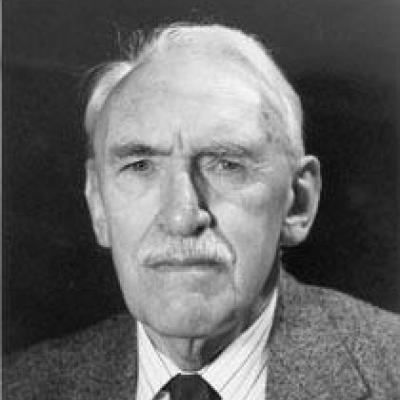
Alan Bullock was a notable British historian. The story of Alan Bullock began on 13 December 1914 in Trowbridge, Wiltshire. The legacy of Alan Bullock continues today, following their passing on 2 February 2004 in Oxford, England.
Alan Louis Charles Bullock, Baron Bullock (13 December 1914 – 2 February 2004) was a British historian. He is best known for his book Hitler: A Study in Tyranny (1952), the first comprehensive biography of Adolf Hitler , which influenced many other Hitler biographies.
Legacy and Personal Influence
Personally, Alan Bullock was married to Hilda Yates Handy married 1 June 1940.
Philosophical Views and Reflections
His work on the Hitler biography prompted Bullock to examine the role of the individual in history. Taking note of the shift in interest among professional historians towards social history , he agreed that deep long-term social forces are generally the decisive historical factor. He believed there are times in which the " Great Man " is decisive. He wrote that during revolutionary circumstances, "It is possible for an individual to exert a powerful even a decisive influence on the way events develop and the policies that are followed".
Bullock was decorated with the award of the Chevalier, Legion of Honour in 1970, and knighted in 1972, becoming Sir Alan Bullock and on 30 January 1976 he was created a life peer as Baron Bullock , of Leafield in the County of Oxfordshire . His writings always appeared under the name "Alan Bullock".