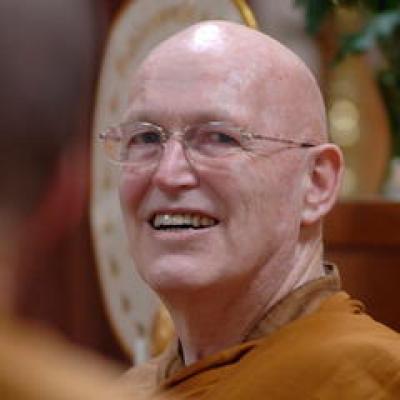
The empty mind - the pure mind - is not a blank, zero-land, where you're not feeling or caring about anything. It's an effulgence of the mind. It's a brightness that is truly sensitive and accepting. It's an ability to accept life as it is. When we accept life as it is, we can respond appropriately to the way we're experiencing it, rather than just reacting out of fear and aversion.
A new day is here. Yesterday is a memory. Tomorrow is unknown. Now is the knowing.
Meditation is a skilful letting go: gently but with resolution.
We look directly into our suffering rather than try to become happy. The happiness that arises from this approach is reliable.
I contemplated my greed for peace. And I did not seek tranquillity anymore.
The mind of an enlightened human being is flexible and adaptable. The mind of the ignorant person is conditioned and fixed.
The problem is grasping the clock. So what do I do? Let it go, lay it aside - put it down gently without any kind of aversion. Then I can pick it up again, see what time it is and lay it aside when necessary.
Suttas are not meant to be 'sacred scriptures' that tell us what to believe. One should read them, listen to them, think about them, contemplate them, and investigate the present reality, the present experience with them. Then, and only then, can one insightfully know the truth beyond words.
The goal lies away from the sensual world. It is not a rejection of the sensual world, but understanding it so well that we no longer seek it as an end in itself. We no longer expect the sensory world to satisfy us. We no longer demand that sensory consciousness be anything other than an existing condition that we can use skillfully according to time and place.
Whatever you think you are, that's not what you are.
Of course we can always imagine more perfect conditions, how it should be ideally, how everyone should behave. But it is not our task to create an ideal. It's our task to see how it is, and to learn from the world as it is. For the awakening of the heart, conditions are always good enough.
Instead of becoming the world’s expert on Buddhism, just let go, let go, let go.