
Abdul sattar abu risha

The history of colonialism is long and bloody. And it continues today, in the shape of Western arrogance vis-à-vis everyone else. "Us against the rest of the world" is the formula that drives the West.

Democracy is a hegemonic tool of the West and contrary to Islam. Why do you act as though the entire world needs democracy? And when it comes to homosexuality, the issue is clearly dealt with by the Koran. It says it is forbidden and should be punished.

It is every Muslim's duty to fight those of a different belief until only Allah is worshipped around the world. Everybody has the opportunity to accept Allah and to change to the right path.

Democracy is for infidels. A real Muslim is not a democrat because he doesn't care about the opinions of majorities and minorities don't interest him. He is only interested in what Islam says.

It is Allah's word just as it is in the Koran. We are also not allowed to translate it. It is unimportant whether what it says is well received or not. We are not allowed to question even a single word.

It is not true that only those people come to Islamic State who have experienced no success in life. Among them are many people who have university degrees, people who were well-established. But they all see the inequities that we Muslims have long experienced and want to fight against them.

A Muslim is a person who follows Allah's laws without question. Sharia is our law. No interpretation is needed, nor are laws made by men. Allah is the only lawmaker.

Christians and Jews go after those who have access to raw materials but who prevent access to them. Oil is the best example. The US and its allies are constantly intervening in countries where they don't belong only to defend their prosperity. We aren't fighting because we are greedy and selfish, rather we are fighting for values and morals.

All people should disclose whether they submit to Allah or not. Those who are against us are our enemies and must be fought. That includes people who call themselves Muslims but who don't lead their lives as such - people who drink, who don't pray, who don't fast, who have constantly changing partners and who are unable to recite the Koran.

We are following Allah's word. We believe that humanity's only duty is to honor Allah and his prophet Muhammad, peace be upon him. We are implementing what is written in the Koran. If we manage to do so, then of course it will be a success.
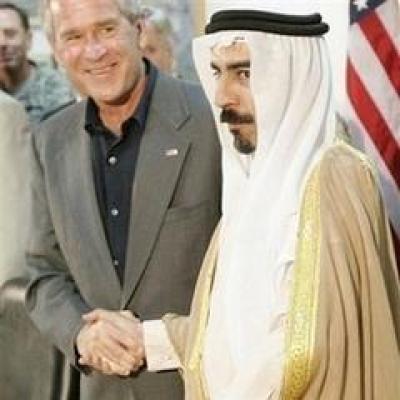
Author details

Abdul Sattar Abu Risha: Biography and Life Work

Abdul Sattar Abu Risha was a notable Sunni tribal chief in. The story of Abdul Sattar Abu Risha began on 13 September 2007 in Iraq. The legacy of Abdul Sattar Abu Risha continues today, following their passing on 13 September 2007 in Ramadi, Iraq.

Abdul Sattar Abu Risha ( Arabic : عبد الستار أبو ريشة ) – Sheikh Abdul Sattar Eftikhan al-Rishawi الشيخ عبد الستار افتيخان الريشاوي – (born 1972 – 13 September 2007) was a high-profile Iraqi tribal sheikh of the Abu-Risha tribe. He was the leader of an alliance of Iraqi Sunni Arab tribes that opposed al-Qaeda in Iraq .

Legacy and Personal Influence

Historically, their work is best remembered for Anbar Awakening.

Major Contributions

  • Anbar Awakening
  • " – opposing
  • al-Qaeda in Iraq

Philosophical Views and Reflections

During the early part of the insurgency following the 2003 invasion of Iraq , as al-Qaeda's fighters tightened their grip on Ramadi, it is reported that they became increasingly repressive and challenged the tribal leaders' power. Soon they were kidnapping and beheading tribal Sunnis as part of a campaign of extortion and intimidation. Abdul Sattar's own father and two brothers were killed by al-Qaeda. During the late summer of 2006, he began enlisting his fellow sheikhs in Sahawat al-Anbar and encouraging members of his tribe to join the local police force. The U.S. forces under Lt. Col. Tony Deane encouraged Sattar and provided security for the initial meetings of the Al Anbar tribal meetings at Sattar's compound in western Ramadi; these early meetings were the beginning of what grew into the Anbar Salvation Council by the fall of 2006; in March 2007 the Council counted 41 clans from Anbar province. The development led to a sharp reduction of violence in the province and forced many al-Qaeda fighters to flee to other regions of Iraq.

The sheikh's funeral attracted about 1,500 mourners, including Iraq's national security adviser Mowaffak al-Rubaie , Interior Minister Jawad Jawad Bulani , Defense Minister General Qadir Obeidi and Lieutenant-General Raymond Odierno , second in command of U.S. forces in Iraq, and sparked vows of revenge. After Abu Risha's death, his brother, Sheik Ahmed Abu Risha , was selected to take over leadership of the Anbar Salvation Council by the tribal leaders of the province.

EQ
Empery Quotes
Inspire · Reflect · Repeat